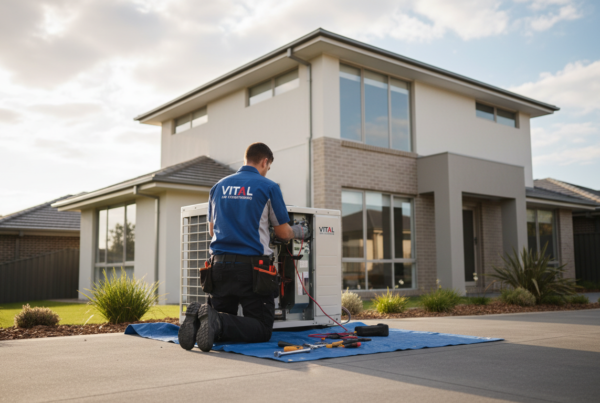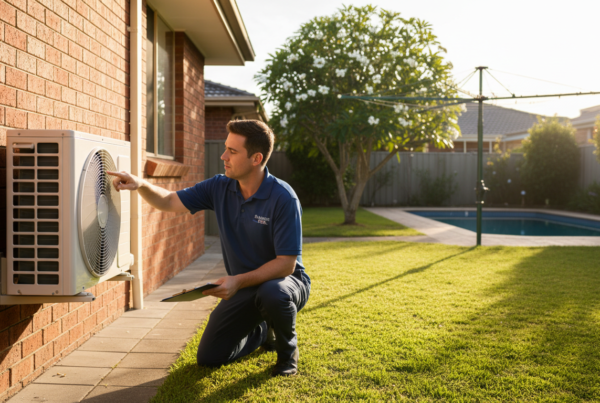
It’s 3am on a sweltering Sydney night when your split system starts making a sound you’ve never heard before—a grinding metallic screech that jolts you awake. Understanding different air conditioner noises and their underlying causes helps you determine whether you’re facing a minor issue or a fault requiring immediate professional attention. As qualified HVAC technicians who’ve diagnosed thousands of noise complaints across Sydney over 25 years, we’ve learned that specific sounds correlate directly with particular component failures, and recognising these patterns can prevent catastrophic system damage.
This diagnostic guide explains what each air conditioner noise indicates, which faults you can safely inspect yourself, and when ARC Tick certified technicians must handle refrigerant or electrical repairs under Australian Standards compliance.
By the Numbers
- STATAccording to the Australian Institute of Refrigeration, Air Conditioning and Heating (AIRAH), mechanical noise complaints account for approximately 35% of residential air conditioning service calls in Australian metropolitan areas, with compressor and fan motor issues representing the majority of fault diagnoses.
- STATEnergy Rating Australia data indicates that poorly maintained air conditioning systems with mechanical faults can consume up to 25% more energy due to increased compressor run time and reduced heat exchange efficiency, directly impacting household electricity costs.
- STATThe Australian Refrigeration Council (ARC) reports that refrigerant leaks—often first detected by hissing sounds—account for over 40% of refrigerant emissions from residential systems, emphasising the importance of immediate professional assessment when leak-related noises occur.
Why Air Conditioners Make Noise (And When It’s a Problem)
All air conditioning systems produce operational sounds during normal function. The compressor generates a low-frequency hum as it circulates refrigerant through the system, while airflow through ducts and across heat exchangers creates gentle whooshing sounds. Fan motors in both indoor and outdoor units contribute their own acoustic signature, typically a consistent whirring that remains stable across operating cycles.
Problems arise when these baseline sounds change in character, volume, or frequency. A sudden shift from smooth operation to rattling, grinding, or hissing indicates mechanical wear, component failure, or refrigerant system compromise. Under AS/NZS 5149.1:2016 (Refrigerating systems and heat pumps — Safety and environmental requirements), certain faults pose immediate safety risks that require system shutdown and professional assessment.
The key distinction lies between sounds you can investigate safely—loose panels, debris accumulation, or filter blockages—and those requiring ARC Tick certified intervention due to refrigerant handling or electrical fault diagnosis under AS/NZS 3000:2018 (Electrical installations). Attempting repairs on pressurised refrigerant systems without proper certification violates Australian refrigerant handling regulations and creates substantial safety hazards.
Buzzing or Humming Sounds: Electrical Issues and Loose Components
Buzzing noises typically originate from electrical components within the outdoor condensing unit. A failing contactor—the relay that controls power to the compressor—produces a distinctive buzzing as electrical contacts arc or vibrate. Capacitors, which provide starting torque for compressor and fan motors, generate humming sounds when their dielectric material degrades, particularly in units exposed to Sydney’s summer heat.
Loose electrical connections create intermittent buzzing that may coincide with compressor startup or shutdown. These faults accelerate component wear and pose fire risks if left unaddressed. Under AS/NZS 3000:2018, all electrical fault diagnosis and repair must be performed by licensed electricians or HVAC technicians with appropriate electrical licensing credentials.
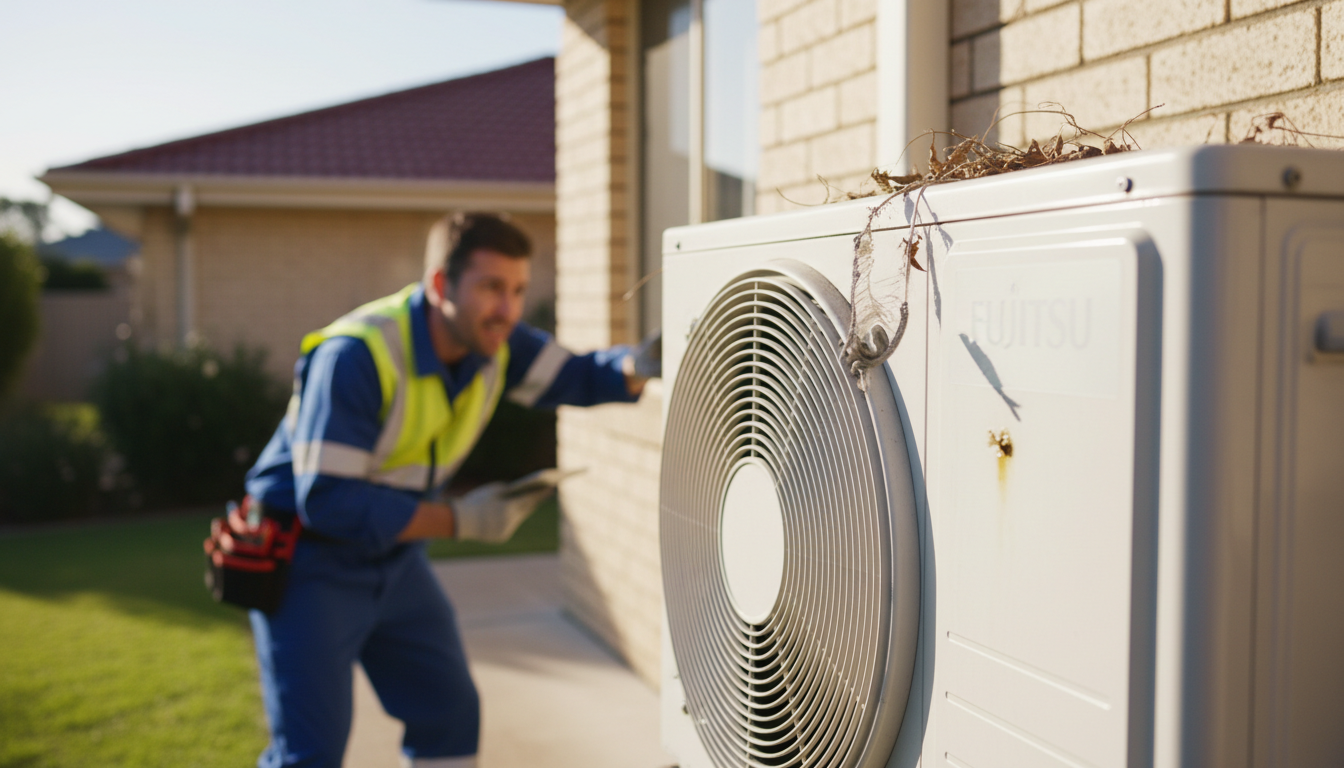
Mechanical buzzing can also result from debris trapped between condenser fan blades and the protective grille. Leaves, twigs, or paper caught in the fan assembly create vibration that transmits through the unit casing. This specific fault is safe for homeowners to inspect—switch off power at the isolator, remove the top grille, and clear any visible debris. If buzzing persists after debris removal, electrical component failure is likely and requires professional diagnosis.
Rattling or Clattering Noises: Debris, Mounting Problems, and Fan Damage
Rattling sounds represent the most common air conditioner noise complaint Vital Air Conditioning receives during Sydney’s storm season. External debris—particularly after high winds—frequently enters outdoor units through the protective grille, lodging between fan blades or settling on the condenser coil. This creates intermittent rattling that intensifies as fan speed increases.
Loose mounting hardware produces a different rattling signature. Split system outdoor units mount to external walls or concrete pads using vibration-dampening brackets. Over time, thermal expansion cycles and building settlement can loosen mounting bolts, allowing the entire unit to vibrate against its mounting surface. This creates a resonant rattling that transmits through building structure, often audible in adjacent rooms.
Internal rattling indicates more serious mechanical issues. Fan blade imbalance—caused by impact damage, bearing wear, or blade degradation—creates rhythmic clattering that corresponds to fan rotation speed. Scroll compressors with failing internal components produce metallic rattling as worn parts contact the compressor housing. Our detailed guide to rattling sounds provides specific diagnostic steps for each fault type.
Homeowners can safely inspect for external debris and loose panels after switching off power at the isolator. Tighten any visibly loose screws on access panels and remove debris from the fan area. If rattling originates from inside the sealed refrigerant circuit or compressor housing, ARC Tick certified assessment is mandatory before operation continues.
Grinding or Metal-on-Metal Sounds: Compressor and Motor Bearing Failure
Grinding noises represent the most urgent air conditioner fault requiring immediate system shutdown. This sound indicates bearing failure in either the compressor or fan motor assemblies. Compressor bearings operate under extreme pressure and temperature conditions, circulating refrigerant at pressures exceeding 2.5 MPa in R410A systems. When bearing surfaces degrade, metal-on-metal contact produces a distinctive grinding or screeching sound that worsens as the compressor runs.
Scroll compressors—common in residential split systems—contain orbiting and fixed scroll elements that compress refrigerant through progressive volume reduction. Bearing wear allows these precision-machined components to contact incorrectly, creating grinding sounds and metal particles that contaminate the refrigerant circuit. Rotary compressors exhibit similar symptoms when their roller bearing assemblies fail, though the acoustic signature differs slightly in frequency.
Fan motor bearings produce grinding sounds at specific rotational frequencies. Condenser fan motors typically operate at 900-1200 RPM, while indoor blower motors run at variable speeds depending on airflow requirements. Bearing failure creates grinding that intensifies under load and may be accompanied by visible wobble in the fan blade assembly.
If your system produces grinding sounds, switch off power immediately at the electrical isolator and contact emergency air conditioner repair services. Continued operation causes catastrophic compressor failure, refrigerant contamination, and potential damage to other system components. Under AS/NZS 5149.1:2016, compressor replacement requires complete refrigerant recovery, system evacuation, and pressure testing by ARC Tick certified technicians.
Hissing or Bubbling Sounds: Refrigerant Leaks and Pressure Issues
Hissing sounds indicate refrigerant escaping from the sealed system under pressure. R32 and R410A refrigerants operate at significantly higher pressures than older R22 systems—discharge pressures can exceed 2.8 MPa during peak cooling operation in Sydney’s summer conditions. A leak at a brazed joint, flare connection, or corroded pipe section creates an audible hiss as pressurised refrigerant expands to atmospheric pressure.
The acoustic signature varies by leak size and location. Large leaks at high-pressure sections produce loud hissing immediately audible near the outdoor unit. Small leaks at low-pressure return lines create subtle hissing that may only be noticeable during compressor operation. Refrigerant leaks reduce system capacity, increase compressor run time, and elevate electricity consumption as the system struggles to maintain setpoint temperature.
Bubbling sounds indicate refrigerant boiling in the evaporator coil due to insufficient charge or restriction in the refrigerant circuit. This occurs when leak-induced refrigerant loss reduces system pressure below design parameters, causing liquid refrigerant to flash to vapour prematurely. The resulting two-phase flow creates bubbling sounds audible near the indoor unit.
Under Australian Refrigerant Handling Code of Practice and AS/NZS 5149.1:2016, all refrigerant leak repairs must be performed by ARC Tick certified technicians. Refrigerant handling requires specialised recovery equipment, leak detection tools, and pressure testing apparatus. Simply adding refrigerant without locating and repairing the leak violates environmental regulations and ensures continued system degradation.
Clicking Sounds When Starting or Stopping: Relay Problems and Thermostat Faults
Single clicking sounds during startup and shutdown represent normal relay operation. The contactor that energises the compressor and condenser fan produces an audible click as its contacts close or open. Similarly, reversing valves in heat pump systems click when switching between cooling and heating modes. These sounds indicate proper electrical sequencing and pose no concern.
Rapid repetitive clicking—often described as chattering—indicates electrical faults preventing normal compressor startup. A failing capacitor provides insufficient starting torque, causing the compressor to attempt startup repeatedly without achieving full operation. The contactor clicks rapidly as the control board cycles power in response to compressor failure to start. This fault pattern stresses electrical components and can damage the compressor windings through repeated high-current inrush.
Thermostat relay clicking without corresponding compressor operation suggests control circuit faults. Modern inverter systems use electronic control boards that communicate between indoor and outdoor units via low-voltage signalling. Clicking from the indoor unit without outdoor unit response indicates communication failure, control board malfunction, or wiring faults. These issues form part of broader common air conditioning problems that require systematic electrical diagnosis.
Clicking accompanied by burning odours requires immediate system shutdown. This combination indicates arcing at electrical connections or component overheating. Switch off power at the isolator and contact a licensed technician before attempting restart. Under AS/NZS 3000:2018, electrical fault diagnosis requires appropriate test equipment and licensing credentials to ensure safe assessment of energised circuits.
Whistling or High-Pitched Sounds: Airflow Restrictions and Duct Leaks
Whistling sounds indicate air moving through restricted passages at high velocity. The most common cause is blocked air filters forcing air through the reduced free area at increased speed. As filter media accumulates dust and particulate, airflow resistance increases, causing the blower motor to work harder and air to accelerate through remaining openings. This creates a high-pitched whistle that intensifies as filter blockage worsens.
Ducted systems develop whistling at poorly sealed joints or undersized duct sections. Air leaking through gaps in duct connections produces localised whistling that may vary with blower speed. Undersized return air ducts create system-wide whistling as the blower attempts to move design airflow through insufficient cross-sectional area. This fault reduces system efficiency and increases energy consumption as the blower motor operates at higher power to overcome resistance.
Expansion valve whistling occurs in refrigerant circuits when the metering device experiences abnormal pressure differentials. Thermostatic expansion valves (TXV) regulate refrigerant flow based on evaporator superheat. Contamination or mechanical wear can cause the valve to flutter, creating high-frequency whistling audible near the indoor unit. This fault requires refrigerant system diagnosis by ARC Tick certified technicians.
Check and replace air filters as your first diagnostic step—our guide to air conditioning filter maintenance provides specific replacement intervals for Sydney conditions. If whistling persists with clean filters, ductwork inspection or refrigerant system assessment becomes necessary.
Banging or Thumping Noises: Compressor Issues and Duct Expansion
Banging sounds fall into two distinct categories based on timing and location. Metallic banging from ductwork during startup or shutdown results from thermal expansion and contraction. Sheet metal ducts expand as warm air flows through them during heating mode or contract when cold air flows during cooling. If ducts are improperly supported or too tightly constrained, this dimensional change produces audible banging as metal panels flex against restraints.
This duct expansion noise is particularly common in Sydney homes with roof-mounted ducted systems exposed to significant temperature differentials. The sound is typically harmless but indicates suboptimal duct installation. Adding expansion joints or adjusting support brackets eliminates the noise without affecting system performance.
Compressor banging represents a more serious fault. Liquid refrigerant entering the compressor—a condition called liquid slugging—causes hydraulic shock as the incompressible liquid impacts internal components designed to compress vapour. This produces loud banging sounds and can fracture compressor components or damage valves. Liquid slugging results from overcharge, expansion valve malfunction, or evaporator flooding due to insufficient superheat.
Compressor mounting isolation failures also create banging. Compressors mount on rubber isolators that dampen vibration transmission to the unit casing. When these isolators degrade or fail, compressor vibration transmits directly to the metal housing, creating banging sounds during operation. This fault accelerates with compressor age and requires replacement of isolation mounts by qualified technicians.
How to Prevent Unusual Air Conditioner Noises
Preventative maintenance eliminates most noise-related faults before they develop into component failures. Systematic inspection and servicing addresses wear patterns, contamination accumulation, and minor mechanical issues that progress to audible symptoms if neglected. Regular air conditioning maintenance by ARC Tick certified technicians identifies developing faults during their early stages when repair costs remain minimal.
Scheduled servicing includes refrigerant pressure verification, electrical connection inspection, bearing lubrication where applicable, and airflow measurement to ensure system operates within design parameters. Technicians identify loose components, worn bearings, and degrading electrical parts before they produce noise symptoms or cause secondary damage to other system components.
- ✓
Listen for changes in noise type or volume during startup, operation, and shutdown cycles - ✓
Check outdoor unit for visible debris, loose panels, or damaged fan blades - ✓
Inspect indoor unit mounting brackets for secure installation and vibration dampening - ✓
Verify air filters are clean and not causing airflow restriction (whistling sounds) - ✓
Note whether noise occurs during cooling, heating, or fan-only modes - ✓
Document when noise started and whether it coincides with recent weather events or power outages - ✓
Confirm electrical isolator switch location before contacting technician for emergency shutoff if grinding or burning smells occur
Annual professional servicing costs substantially less than emergency repairs for failed components. Technicians verify refrigerant charge, measure electrical current draw, inspect heat exchanger condition, and test safety controls. This systematic approach identifies wear patterns before they produce noise symptoms or compromise system reliability.
When to Call a Professional for Air Conditioner Repair
Certain air conditioner noises require immediate professional assessment regardless of system age or maintenance history. Grinding, hissing, or rapid clicking sounds indicate faults that worsen rapidly and cause secondary damage if operation continues. Switch off the system at the electrical isolator and contact ARC Tick certified technicians before attempting restart.
Refrigerant-related sounds—hissing, bubbling, or gurgling—require professional diagnosis under AS/NZS 5149.1:2016. Refrigerant handling, leak detection, and system recharging must be performed by technicians holding current ARC Tick certification. Attempting DIY refrigerant work violates Australian environmental regulations and creates substantial safety hazards from high-pressure refrigerant release or improper system charging.
Electrical fault diagnosis requires appropriate test equipment and licensing under AS/NZS 3000:2018. Buzzing from contactors, humming from capacitors, or clicking without compressor operation indicate electrical component failure requiring systematic diagnosis. Licensed technicians use multimeters, clamp ammeters, and insulation resistance testers to identify fault locations safely while circuits remain energised.
Vital Air Conditioning provides 24/7 emergency aircon repair services across Sydney Metro, Hills District, Eastern Suburbs, and Inner West. Our technicians carry comprehensive diagnostic equipment and common replacement components to resolve most faults during the initial visit. Recognising these signs your air conditioner needs professional servicing prevents minor issues from escalating into complete system failure requiring costly replacement.
Frequently Asked Questions
Is it normal for my air conditioner to make noise?
Some operational noise is normal—a gentle hum from the compressor and airflow sounds are expected. However, sudden changes in noise type or volume, particularly grinding, hissing, or banging sounds, indicate mechanical or refrigerant system faults requiring assessment by an ARC Tick certified technician under AS/NZS 5149.1:2016 (Refrigerating systems and heat pumps — Safety and environmental requirements).
What does a buzzing sound from my air conditioner mean?
Buzzing typically indicates electrical issues such as loose wiring, failing contactors, or capacitor problems within the outdoor unit. These faults can cause compressor damage if unaddressed and must be diagnosed by a licensed technician compliant with AS/NZS 3000:2018 (Electrical installations). Buzzing may also result from debris trapped in the condenser fan.
Should I turn off my air conditioner if it’s making a grinding noise?
Yes, immediately switch off the unit at the isolator and contact a qualified technician. Grinding sounds indicate bearing failure in the compressor or fan motor, which can cause catastrophic component damage if operation continues. Under AS/NZS 5149.1:2016, refrigerant system repairs require ARC Tick certification to ensure safe refrigerant handling and pressure testing.
Can I fix rattling noises in my air conditioner myself?
Minor rattling from loose panels or debris in the outdoor unit can often be resolved by homeowners—check for leaves, twigs, or loose screws. However, internal rattling from fan blades, mounting brackets, or compressor components requires professional diagnosis. Attempting repairs on refrigerant-containing components without ARC Tick certification violates Australian refrigerant handling regulations.
How much does air conditioner repair cost in Sydney for noise issues?
Repair costs vary by fault type: simple fixes like tightening panels or clearing debris may cost $150-$250, while compressor bearing replacement or refrigerant leak repairs typically range $500-$1,500 depending on system capacity and refrigerant type (R32, R410A). Vital Air Conditioning provides transparent quotes and a 5-year warranty on all repairs across Moorebank and greater Sydney.
Unusual air conditioner noises require expert diagnosis. Vital Air Conditioning has served Sydney homes for over 25 years with ARC Tick certified technicians available 24/7 for emergency repairs. Contact us for same-day service backed by our 5-year workmanship warranty.