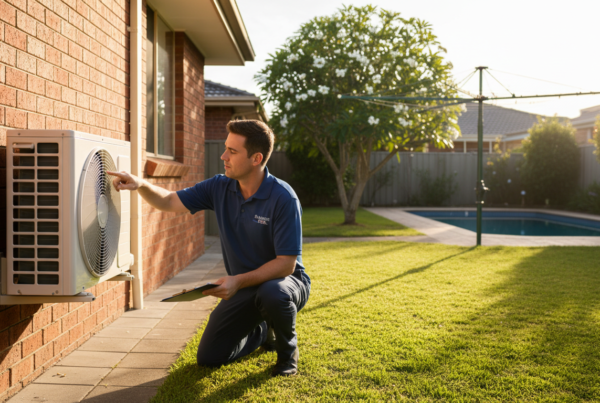
As qualified HVAC technicians who have diagnosed controller errors across Sydney for over 25 years, we’ve seen how these warning signals prevent minor issues from becoming expensive system failures. The blinking controller is essentially your air conditioner’s way of protecting itself while alerting you to problems that require attention.
What Does It Mean When Your Aircon Controller Is Blinking?
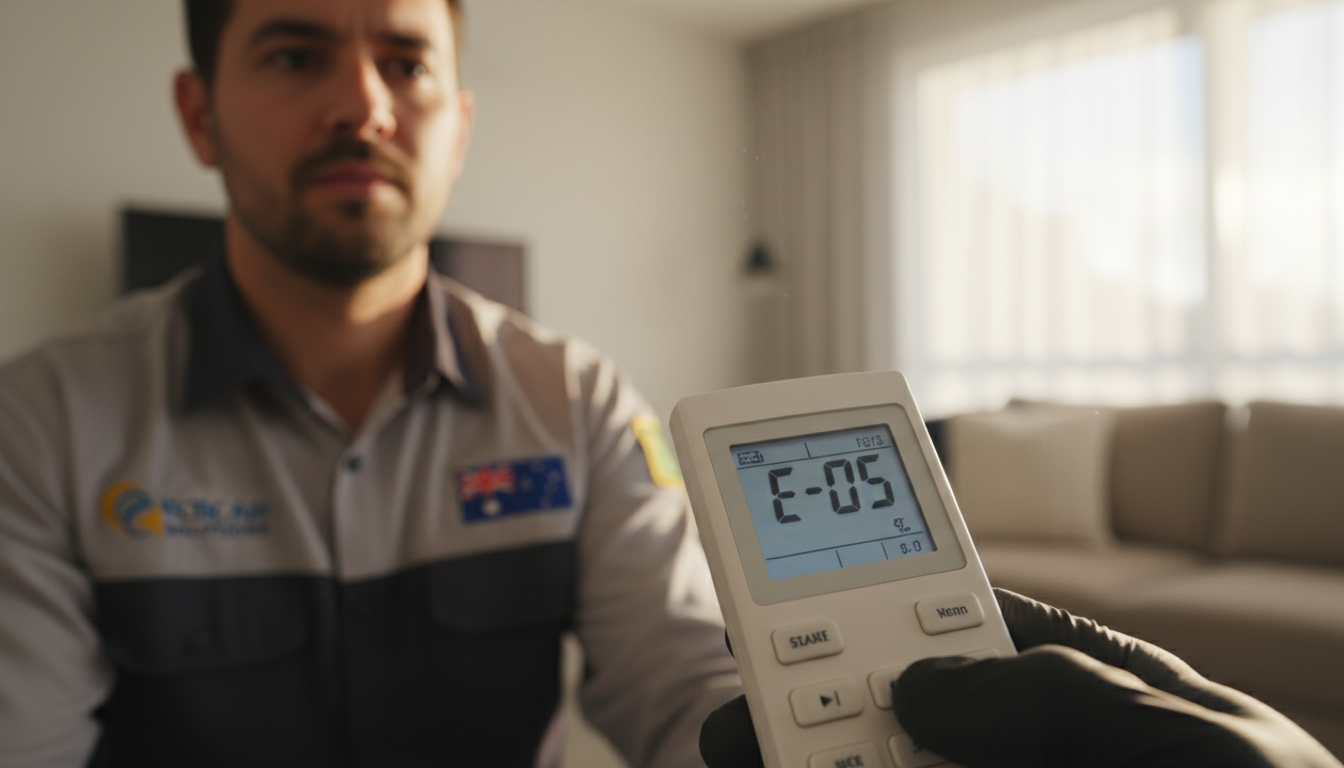
A blinking controller indicates your air conditioning system has detected an operational fault and triggered a protective shutdown. Modern air conditioners manufactured to AS/NZS 60335.2.40:2013 (Household and similar electrical appliances — Safety — Particular requirements for electrical heat pumps, air-conditioners and dehumidifiers) incorporate sophisticated self-diagnostic systems that monitor dozens of parameters including refrigerant pressures, electrical supply quality, sensor readings, and component temperatures.
When any monitored parameter falls outside acceptable operating ranges, the system enters a fault mode and communicates the specific error through a coded blinking pattern on your controller. The colour, frequency, and number of blinks correspond to specific fault codes documented in your manufacturer’s technical manual. According to the Australian Refrigeration Council (ARC), over 60% of air conditioning faults in NSW are related to refrigerant issues, electrical component failures, or blocked drainage systems — all commonly indicated by blinking controller lights.
The blinking pattern serves two critical functions: it prevents continued operation that could damage expensive components like compressors or inverter boards, and it provides diagnostic information that ARC Tick certified technicians use to identify the fault quickly without extensive troubleshooting.
Common Error Codes Indicated by Blinking Lights
Major air conditioning manufacturers use distinct blinking patterns to indicate specific faults. Daikin systems typically use a combination of operation lamp and timer lamp blinks, with patterns like two green blinks indicating outdoor unit communication errors, while four orange blinks signal high-pressure protection shutdown. Mitsubishi Electric units often display error codes through LED sequences on both the indoor controller and outdoor unit circuit board, with patterns such as three red blinks indicating thermistor faults.
Fujitsu controllers frequently show error codes through a combination of operation and economy lamp blinks, where six blinks typically indicate outdoor unit fan motor problems. Panasonic systems use timer lamp flash patterns, with continuous rapid blinking often signaling refrigerant system issues requiring immediate attention from licensed technicians.
By the Numbers
- STATAccording to the Australian Refrigeration Council (ARC), over 60% of air conditioning faults in NSW are related to refrigerant issues, electrical component failures, or blocked drainage systems — all commonly indicated by blinking controller lights
- STATEnergy Rating Australia data shows that poorly maintained air conditioning systems consume up to 30% more electricity, with controller error codes often being the first indicator of efficiency loss requiring professional attention
- STATThe Australian Institute of Refrigeration, Air Conditioning and Heating (AIRAH) reports that regular annual servicing can prevent up to 85% of controller error codes by identifying sensor drift, refrigerant pressure issues, and electrical connection problems before they trigger system shutdowns
For detailed interpretation of specific manufacturer codes, refer to our comprehensive guide to aircon error codes which covers the most common fault patterns across all major brands serviced in Sydney.
What Causes Your Aircon Controller to Blink?
Controller blinking results from faults detected across multiple system components. Refrigerant pressure issues represent the most common category, occurring when refrigerant charge levels drop due to leaks, or when pressure ratios exceed safe operating limits during extreme temperature conditions. AS/NZS 5149.1:2016 (Refrigerating systems and heat pumps — Safety and environmental requirements) mandates specific pressure safety controls that trigger shutdowns when high-side pressure exceeds design limits or low-side pressure drops below minimum thresholds.
Electrical supply problems cause controller errors when voltage fluctuates outside the acceptable range specified in AS/NZS 3000:2018 (Electrical installations, known as the Australian/New Zealand Wiring Rules). Undersized circuit breakers, loose connections, or voltage drops during peak demand periods trigger protective shutdowns indicated by specific blink patterns. Communication failures between indoor and outdoor units, caused by damaged control wiring or circuit board faults, produce distinctive error codes that prevent system operation until repaired.
Sensor malfunctions account for a significant proportion of blinking controller issues. Thermistors that measure air and refrigerant temperatures can drift out of calibration or fail completely, sending incorrect readings that trigger protective responses. Pressure transducers monitoring refrigerant system operation similarly cause shutdowns when they provide faulty data to the control system.
Understanding these common air conditioning problems helps homeowners recognize when professional diagnosis is required versus situations where simple maintenance resolves the issue.
Blinking Lights Related to Drainage and Water Issues
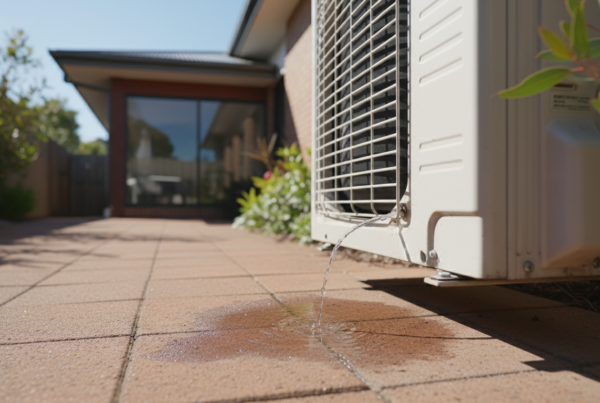
Condensate drainage problems frequently trigger controller errors in Sydney’s humid coastal climate, where indoor units can produce 15-25 litres of condensate daily during summer operation. When condensate drain lines become blocked with algae, dust, or debris, water backs up and triggers float switches designed to prevent overflow damage. This safety feature, required under AS/NZS 3000:2018 for units installed above ceiling spaces or occupied areas, causes the controller to blink and shut down the system.
Condensate pump failures in multi-storey installations produce similar error codes. These pumps, which lift condensate to drainage points above the indoor unit, incorporate float switches that detect pump failure and trigger protective shutdown. In Sydney installations where condensate must be pumped vertically through ceiling spaces, pump bearing wear or impeller blockages commonly cause blinking controller errors during peak cooling periods.
For detailed guidance on resolving these issues, our article on water leak causes and fixes provides specific troubleshooting steps for Sydney homeowners.
When a Blinking Controller Means Your System Won’t Start
Certain error codes prevent system startup entirely, requiring resolution before operation can resume. Power supply faults indicated by specific blink patterns occur when voltage levels fall outside the acceptable range of 220-240V AC specified in AS/NZS 3000:2018. Brownout conditions during Sydney’s peak summer demand periods can trigger these protective shutdowns, as can undersized electrical circuits unable to handle compressor startup current.
Compressor protection errors prevent startup when the system detects conditions that could damage the compressor. High-pressure cutout switches, mandated by AS/NZS 5149.1:2016, prevent operation when discharge pressure exceeds safe limits due to restricted airflow across the outdoor coil or refrigerant overcharge. Low-pressure cutout switches similarly prevent startup when refrigerant charge is insufficient or when expansion valve faults create abnormal pressure conditions.
Inverter board faults produce error codes that completely disable system operation. These sophisticated power electronics, which control compressor speed in modern variable-capacity systems, incorporate multiple protection circuits that trigger shutdowns when DC bus voltage, current draw, or component temperatures exceed safe parameters. Our detailed guide on why your air conditioner won’t turn on covers these startup failure scenarios comprehensively.
Temperature Sensor and Thermistor Faults Causing Flashing Lights
Thermistors, which are precision temperature sensors using negative temperature coefficient resistance, monitor critical temperatures throughout the refrigeration system. Indoor air temperature thermistors measure return air temperature to control cooling capacity and maintain setpoint. When these sensors fail or drift out of calibration, the controller receives incorrect temperature data and triggers error codes indicated by specific blinking patterns.
Coil thermistors mounted on the evaporator and condenser coils monitor refrigerant temperatures to prevent freeze-up conditions and ensure efficient heat exchange. A faulty evaporator coil thermistor may fail to detect approaching freeze conditions, or conversely may send false low-temperature readings that trigger unnecessary defrost cycles. These faults produce distinctive error codes that experienced technicians recognize immediately.
Outdoor ambient thermistors measure external air temperature to adjust system capacity for prevailing conditions. In Sydney’s climate, where summer temperatures regularly exceed 35°C, accurate outdoor temperature sensing is critical for preventing compressor overload. Thermistor failures that report incorrect outdoor temperatures cause the system to operate outside design parameters, triggering protective shutdowns indicated by controller blinking.
Warning:
When to Call a Licensed Technician vs DIY Troubleshooting
Homeowners can safely perform limited troubleshooting steps before contacting professional technicians. Checking and cleaning air filters represents the most effective DIY intervention, as blocked filters cause approximately 40 percent of airflow-related error codes. Inspecting the outdoor unit for debris, leaves, or obstructions that restrict airflow similarly addresses common causes of high-pressure shutdowns without requiring technical expertise or tools.
Verifying that circuit breakers have not tripped and that the system receives proper electrical supply falls within safe DIY troubleshooting. Attempting a system reset by switching off power at the wall for five minutes, then restarting, can clear transient error codes caused by brief power fluctuations or communication glitches.
- 1
Document the error patternCount the exact number of blinks, note the colour, and record whether the pattern repeats consistently. This information helps technicians diagnose the fault quickly.
- 2
Perform safe visual checksInspect filters, outdoor unit clearance, and drainage without opening sealed components or touching electrical connections.
- 3
Attempt a single resetSwitch off at the wall for five minutes, then restart. If the error returns immediately, professional diagnosis is required.
- 4
Contact licensed technicians for persistent errorsUnder the Ozone Protection and Synthetic Greenhouse Gas Management Act 1989, only ARC Tick certified technicians can legally work on refrigerant systems. Electrical faults require licensed electricians per AS/NZS 3000:2018.
Understanding these signs your air conditioner needs immediate professional attention helps homeowners avoid attempting repairs that require legal certification and specialized equipment.
Why ARC Tick Certification Matters for Error Code Diagnosis
ARC Tick certification represents the legal requirement for anyone handling refrigerants in Australia under the Ozone Protection and Synthetic Greenhouse Gas Management Act 1989. This certification ensures technicians understand refrigerant properties, pressure-temperature relationships, leak detection procedures, and proper handling techniques that prevent environmental harm and ensure system safety.
When diagnosing blinking controller errors related to refrigerant systems, ARC Tick certified technicians use calibrated pressure gauges to measure actual system pressures against manufacturer specifications. They perform leak detection using electronic sensors or ultraviolet dye systems that identify refrigerant escape points invisible to visual inspection. Recovery and recharging procedures, required when repairing leaks or replacing components, must follow AS/NZS 5149.4:2016 (Refrigerating systems and heat pumps — Refrigerant reclaiming and recovery) protocols that only certified technicians understand.
Electrical fault diagnosis similarly requires specific qualifications. Licensed electricians working to AS/NZS 3000:2018 standards use multimeters and insulation resistance testers to identify voltage supply issues, circuit protection problems, and component failures safely. The importance of hiring ARC Tick licensed technicians extends beyond legal compliance to ensuring repairs meet safety standards and maintain manufacturer warranty coverage.
Preventing Controller Errors Through Regular Maintenance
Preventative maintenance significantly reduces the frequency of controller error codes. The Australian Institute of Refrigeration, Air Conditioning and Heating (AIRAH) reports that regular annual servicing can prevent up to 85 percent of controller error codes by identifying sensor drift, refrigerant pressure issues, and electrical connection problems before they trigger system shutdowns.
Professional maintenance includes cleaning evaporator and condenser coils to maintain design airflow and heat transfer efficiency. Dirty coils cause elevated operating pressures that trigger high-pressure cutout switches, while restricted airflow across evaporator coils leads to freeze-up conditions and low-pressure faults. Technicians measure refrigerant superheat and subcooling to verify correct charge levels, identifying slow leaks before they cause system failure.
Electrical connection inspection prevents controller errors caused by loose terminals or corroded contacts. Sydney’s coastal environment accelerates corrosion of electrical connections, particularly in outdoor units exposed to salt-laden air. Tightening connections and applying protective coatings during annual service prevents voltage drops and intermittent faults that produce confusing error codes.
Condensate drain cleaning during scheduled maintenance prevents the blocked drainage errors common in humid climates. Technicians flush drain lines with appropriate cleaning solutions, verify proper drain slope, and test condensate pump operation under load conditions. Following the recommended air conditioner servicing schedule of annual professional maintenance prevents most drainage-related controller errors.
How to Reset Your Aircon Controller Safely
Resetting your air conditioner controller clears transient error codes caused by brief power interruptions or temporary sensor glitches. The safe reset procedure begins by switching off the air conditioner at the controller, then isolating power at the wall switch or circuit breaker. Waiting a full five minutes allows capacitors to discharge completely and the control system to reset all stored error conditions.
- ✓
Count the exact number of blinks and note the colour (red, green, orange) before the pattern repeats - ✓
Check your user manual or manufacturer website for the specific error code corresponding to the blink pattern - ✓
Inspect the air filter and clean if visibly blocked — dirty filters cause 40% of airflow-related error codes - ✓
Verify the outdoor unit is clear of debris, leaves, and obstructions that restrict airflow - ✓
Check the condensate drain pipe for blockages or water pooling near the indoor unit - ✓
Attempt a full system reset by switching off at the wall for 5 minutes, then restarting - ✓
If the error persists after reset, photograph the blinking pattern and contact an ARC Tick licensed technician - ✓
Do not attempt to open the controller housing or manipulate refrigerant components — this requires legal certification under NSW regulations
After restoring power, observe whether the system starts normally or whether the blinking pattern returns immediately. If the error code reappears within seconds of power restoration, this indicates a persistent fault requiring professional diagnosis rather than a transient glitch. Repeatedly resetting the system without addressing the underlying fault risks component damage and potentially voids manufacturer warranty coverage.
Energy Rating Australia data shows that poorly maintained air conditioning systems consume up to 30 percent more electricity, with controller error codes often being the first indicator of efficiency loss requiring professional attention. Addressing blinking controller warnings promptly prevents minor issues from escalating into expensive component failures while maintaining system efficiency.
Vital Air Conditioning has diagnosed and resolved controller error codes across Sydney for over 25 years. Our ARC Tick licensed technicians provide same-day service, transparent pricing, and a 5-year workmanship warranty on all repairs.
Frequently Asked Questions
Why is my Daikin air conditioner controller blinking and not cooling?
A blinking controller on Daikin units typically indicates a fault code related to refrigerant pressure, compressor protection, or sensor failure. According to AS/NZS 5149.1:2016 (Refrigerating systems and heat pumps — Safety and environmental requirements), only ARC Tick licensed technicians can legally diagnose and repair refrigerant-related faults in NSW. Count the number of blinks to identify the specific error code in your user manual.
Can I reset my air conditioner controller when it’s blinking?
You can safely reset most controllers by switching off the unit at the wall, waiting 5 minutes, then restarting. However, if the blinking returns immediately, this indicates a persistent fault requiring professional diagnosis. AS/NZS 3000:2018 (Electrical installations) requires that electrical faults be assessed by licensed electricians, and refrigerant system issues must be handled by ARC Tick certified technicians under the Ozone Protection and Synthetic Greenhouse Gas Management Act 1989.
What does a red blinking light on my aircon controller mean?
Red blinking lights typically signal critical faults: compressor overload, high-pressure shutdown, or electrical supply issues. The blink pattern (number and frequency) corresponds to specific error codes in your manufacturer’s documentation. In Sydney’s climate with summer temperatures regularly exceeding 35°C, compressor protection shutdowns are common when outdoor units are obstructed or refrigerant charge is incorrect.
How much does it cost to fix a blinking aircon controller in Sydney?
Diagnostic callouts from licensed technicians in Sydney typically range from $110–$180, with repair costs depending on the fault identified. Simple fixes like cleaning blocked condensate drains cost $150–$250, while refrigerant leaks requiring pressure testing per AS/NZS 5149.4:2016 and recharging can cost $350–$800. Vital Air Conditioning provides transparent quoting after diagnosis and offers a 5-year warranty on workmanship.
Is a blinking controller covered under air conditioner warranty?
Manufacturing defects causing controller errors are typically covered under manufacturer warranties (usually 5 years for parts, 1 year for labour). However, faults caused by lack of maintenance, incorrect installation not complying with AS/NZS 3000:2018, or environmental factors are usually excluded. Regular servicing by ARC Tick licensed technicians maintains warranty validity and is recommended annually in Australian conditions.