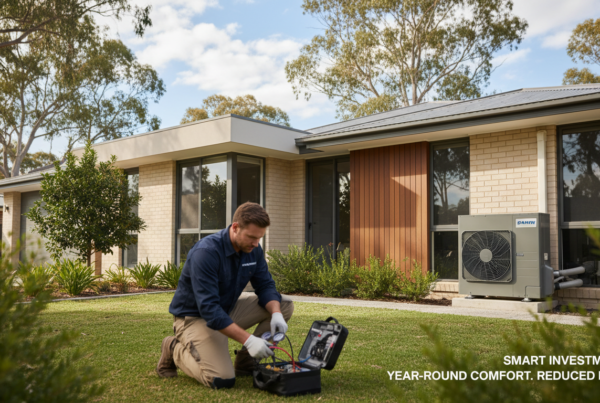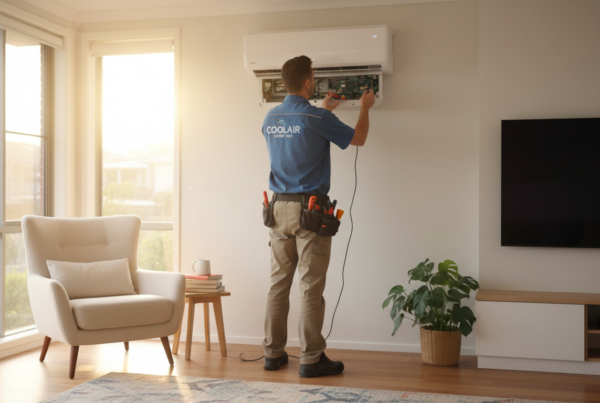
When your air conditioner runs constantly but delivers weak cooling, airflow restrictions are often the primary cause requiring ac repair. Over 25 years servicing Sydney homes, Vital Air Conditioning has diagnosed thousands of cases where blocked filters, duct leaks, or faulty blower motors reduce system capacity by 30-50%. These restrictions force your compressor to work harder while delivering less comfort, increasing energy consumption and accelerating component wear. Understanding the common causes of weak airflow helps you identify whether simple filter maintenance or professional duct diagnostics are required.
This diagnostic guide addresses the specific airflow challenges affecting Sydney’s predominantly ducted residential systems, where roof space temperatures exceeding 60°C during summer exacerbate duct leakage and insulation degradation. We reference AS/NZS 4254 (Ductwork for air-handling systems in buildings), AS/NZS 3666.1 (Mechanical services in buildings – microbial control), and AS/NZS 3000 (Electrical installations – wiring rules) to provide technically accurate troubleshooting guidance while clearly distinguishing DIY checks from work requiring ARC Tick licensed technicians.
By the Numbers
- STATAccording to the Department of Climate Change and Energy Efficiency (DCCEE), duct leakage in Australian homes averages 15-25% of total airflow, with poorly sealed systems losing up to 40% of conditioned air into roof spaces
- STATThe Australian Institute of Refrigeration, Air Conditioning and Heating (AIRAH) reports that blocked filters account for 35% of all residential air conditioning service calls during Sydney’s peak summer months
How Airflow Restrictions Impact Cooling Performance and Energy Efficiency
Ducted air conditioning systems require specific airflow rates to achieve rated cooling capacity. AS/NZS 3666.1 establishes that residential systems typically need 400-450 cubic metres per hour (m³/h) of airflow per kilowatt of cooling capacity. A 10kW system operating below 4,000 m³/h experiences reduced refrigerant heat exchange at the evaporator coil, causing inadequate cooling and increased compressor run time.
When airflow drops below design specifications, evaporator coil temperatures fall below the normal 4-8°C operating range. This causes moisture in the air stream to freeze on coil surfaces, creating ice blockages that further restrict airflow. The compressor continues running to meet thermostat demand, but the ice-blocked coil cannot absorb heat from your home’s air. This cycle increases electricity consumption by 20-40% while delivering progressively weaker cooling until the system fails completely.
Airflow restrictions also create pressure imbalances throughout the duct system. Undersized return air pathways force the blower motor to work harder against increased static pressure, accelerating bearing wear and motor failure. Supply ducts with excessive leakage lose conditioned air into roof spaces before reaching living areas, wasting energy while failing to cool occupied rooms effectively.
Blocked or Dirty Air Filters Restricting Airflow
Air filters represent the most common airflow restriction in ducted systems. AS/NZS 3666.1 mandates filter inspection every three months in residential applications, with monthly checks recommended during high-use cooling seasons. A filter blocked beyond 50% capacity can reduce airflow by 30-40%, causing the evaporator coil temperature to drop below freezing and initiating ice formation.
Most ducted systems use pleated filters rated at MERV 8-11 (Minimum Efficiency Reporting Value), which capture particles between 3-10 microns. These filters accumulate dust, pollen, and textile fibres from normal household air circulation. In Sydney homes with pets or during high-pollen spring months, filter loading accelerates significantly. Following proper filter maintenance procedures prevents the majority of airflow-related cooling failures.
Return air grille filters require different maintenance than central return filters. Grille-mounted filters are typically lower-efficiency washable types that need cleaning every 4-6 weeks during cooling season. Central return filters located at the indoor unit should be replaced rather than cleaned, as washing damages the pleated media and reduces filtration efficiency. Always verify filter dimensions and MERV rating before purchasing replacements to maintain design airflow rates.
When replacing filters, check the filter housing for bypass gaps where unfiltered air enters the system. Filters must seal completely against the housing frame. Gaps as small as 10mm allow dust-laden air to bypass filtration and accumulate directly on evaporator coil fins, requiring professional coil cleaning to restore airflow.
Undersized or Poorly Designed Ductwork
Ductwork sizing directly determines whether your air conditioner can deliver rated cooling capacity. AS/NZS 4254 (Ductwork for air-handling systems in buildings) specifies duct dimensions based on airflow velocity and static pressure requirements. Undersized ducts create excessive air velocity above 6 metres per second, generating turbulence noise and increasing static pressure that the blower motor must overcome.
Common design errors include using 150mm flexible duct for supply runs requiring 200mm diameter, or installing excessive duct length without accounting for friction losses. Each metre of flexible duct adds approximately 0.5 Pa of static pressure per metre at design airflow. A 15-metre run to a distant bedroom may require 250mm duct to maintain adequate airflow, whereas the installer used 150mm duct sized for a 6-metre run.
Duct transitions and fittings create additional restrictions. Sharp 90-degree elbows in rectangular ductwork can reduce airflow by 15-20% at each fitting. Proper design uses radius elbows with turning vanes to maintain laminar airflow. Flex duct compressed or kinked during installation creates severe restrictions that cannot be corrected without duct replacement. Improving overall air circulation often requires professional duct redesign rather than simple repairs.
Return air pathways require equal attention to supply ductwork. AS/NZS 3666.1 requires return air grilles sized to maintain air velocity below 2.5 m/s to prevent noise and excessive static pressure. Homes with single central returns often experience inadequate airflow from distant rooms, creating pressure imbalances that reduce system efficiency. Adding secondary return air grilles or undercut doors by 20mm improves return air pathways without major duct modifications.
Duct Leaks and Poor Sealing Causing Pressure Loss
Duct leakage represents one of the most significant yet invisible causes of weak cooling in Sydney homes. AS/NZS 4254 requires pressure testing to verify leakage below 10% of total system airflow, but many older installations lose 20-30% of conditioned air through poorly sealed joints, disconnected flex duct, and penetrations through duct walls. Understanding ducted system design principles helps identify where leaks commonly occur.
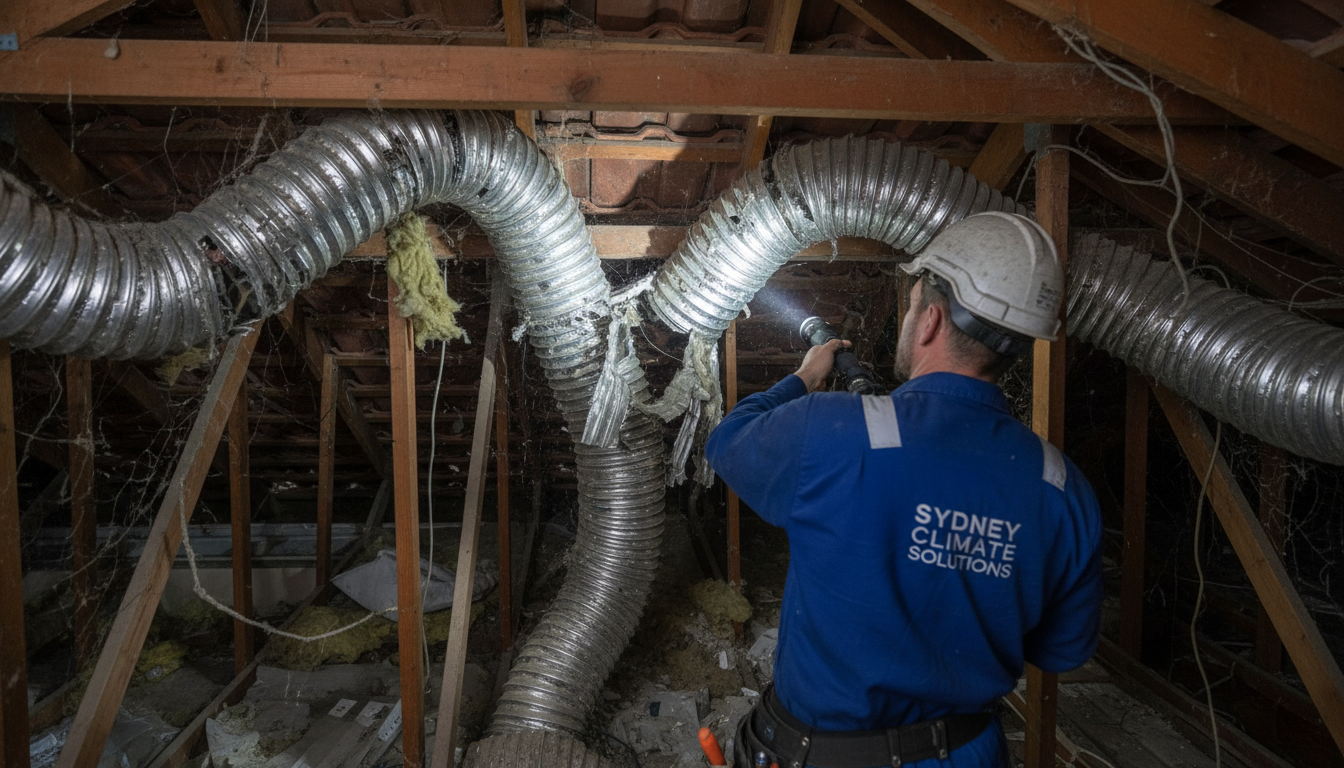
Duct leaks occur most frequently at connection points between flex duct and rigid plenums, boot fittings at ceiling registers, and longitudinal seams in rectangular ductwork. Proper sealing requires mastic sealant or foil-backed tape rated for HVAC applications. Standard cloth duct tape degrades within 2-3 years in roof space environments, allowing joints to separate and leak conditioned air into unconditioned spaces.
Sydney’s extreme roof space temperatures accelerate duct deterioration. Flexible duct insulation exposed to 60°C temperatures degrades over 10-15 years, developing cracks and separations that leak air. Metal ductwork expands and contracts with temperature cycles, loosening mechanical fasteners and opening gaps at slip joints. Professional duct pressure testing using calibrated airflow meters identifies leak locations that visual inspection cannot detect.
Duct leakage testing involves sealing all registers and pressurising the duct system to 25 Pa, then measuring airflow required to maintain pressure. Total leakage is calculated as a percentage of system design airflow. Systems exceeding 10% leakage require remedial sealing to meet AS/NZS 4254 standards. Vital Air Conditioning performs duct pressure testing as part of comprehensive air conditioner maintenance assessments, using thermal imaging to locate specific leak points in accessible ductwork.
Blocked or Closed Supply Registers and Return Air Grilles
Supply register and return air grille obstructions create immediate airflow restrictions that homeowners can address without professional assistance. AS/NZS 3666.1 requires minimum 600mm clearance around return air grilles to prevent air starvation and excessive static pressure. Furniture placed against return grilles, curtains covering supply registers, or closed bedroom doors without adequate undercut all restrict system airflow.
Adjustable supply registers allow occupants to direct airflow, but closing registers in unused rooms does not save energy in ducted systems. Closing more than 30% of supply registers increases static pressure throughout the duct system, forcing the blower motor to work harder while reducing airflow to open registers. The system’s cooling capacity remains constant regardless of how many registers are open, so closed registers simply waste the conditioned air through increased duct leakage at higher pressures.
Return air grille blockages create more severe problems than supply register restrictions. The blower motor pulls air through return grilles against atmospheric pressure. Blocked returns force the motor to work against excessive negative pressure, accelerating bearing wear and potentially causing motor overheating. Verify that return grilles have unobstructed airflow with no furniture within 600mm and no debris accumulated on grille faces.
Register dampers installed at supply boots allow airflow balancing during system commissioning. These dampers should remain in the position set by the installing technician. Adjusting dampers without airflow measurement equipment creates pressure imbalances that reduce system efficiency. If certain rooms receive inadequate cooling, professional airflow balancing using calibrated instruments provides the correct solution rather than arbitrary damper adjustments.
Faulty Blower Motor or Fan Speed Issues
The blower motor and fan assembly move air through the duct system at the volume and pressure required for proper cooling. Multi-speed or variable-speed blower motors operate at different speeds for heating and cooling modes, with cooling typically requiring higher airflow rates. Motor failures, capacitor degradation, or incorrect speed settings all cause airflow restrictions that prevent adequate cooling.
Blower motor bearings wear over time, particularly in systems operating year-round. Bearing noise presents as squealing or grinding sounds from the indoor unit during operation. As bearings deteriorate, friction increases and motor speed decreases, reducing airflow below design specifications. Motors with sealed bearings cannot be serviced and require complete replacement when bearing failure occurs.
Motor run capacitors store electrical charge to provide starting torque and maintain motor speed under load. Capacitors degrade gradually, losing capacitance over 5-10 years of operation. A motor with a weak capacitor may start successfully but fail to reach full speed, delivering 60-70% of design airflow. Capacitor testing requires electrical measurement equipment and must be performed by licensed technicians in accordance with AS/NZS 3000 (Electrical installations – wiring rules).
Variable-speed ECM (electronically commutated motor) blowers use electronic control boards to regulate motor speed based on system demand. Control board failures or incorrect configuration settings cause the motor to operate at reduced speed, limiting airflow. ECM motor diagnostics require specialised testing equipment to verify control signals and motor response. These motors offer superior energy efficiency compared to PSC (permanent split capacitor) motors but require professional diagnosis when airflow problems occur.
Evaporator Coil Icing Due to Restricted Airflow
Evaporator coil icing occurs when airflow drops below 400 m³/h per kilowatt of cooling capacity, causing coil surface temperature to fall below 0°C. Moisture in the air stream freezes on coil fins, creating an ice layer that progressively blocks airflow and prevents refrigerant heat exchange. This condition represents the end result of various airflow restrictions rather than a primary fault.
Ice formation typically begins at the suction line connection where refrigerant enters the coil at its coldest temperature. As ice accumulates, it spreads across the entire coil surface, eventually blocking airflow completely. The system continues running with the compressor circulating refrigerant, but no heat exchange occurs because air cannot contact the ice-covered coil. Supply air temperature may initially feel cold due to air passing over ice, but cooling capacity drops to near zero.
When you observe ice on the evaporator coil or suction line, the immediate action is to turn off the system and allow complete ice melt before investigating the underlying airflow restriction. Running the system with a frozen coil causes liquid refrigerant to return to the compressor, potentially causing mechanical damage. Ice melt typically requires 2-4 hours depending on ambient temperature and ice thickness.
After ice melts, check air filters first as the most common cause of restricted airflow. If filters are clean and ice reforms within 24 hours of system restart, professional diagnosis is required to identify duct restrictions, blower motor faults, or refrigerant system problems. Low refrigerant charge can also cause evaporator icing, requiring ARC Tick licensed technicians to perform refrigerant pressure testing and system recharging in accordance with the Ozone Protection and Synthetic Greenhouse Gas Management Act 1989.
When to Call a Licensed Technician for Airflow Issues
Homeowners can safely perform basic airflow checks including filter replacement, register clearance verification, and visual duct inspection in accessible areas. However, airflow diagnosis involving refrigerant system access, duct pressure testing, blower motor electrical work, or evaporator coil service requires licensed professionals with appropriate qualifications.
ARC Tick certification is legally required when airflow diagnosis involves refrigerant system components. Accessing the evaporator coil for cleaning or inspection requires opening the refrigerant circuit, which only ARC Tick holders can perform. Refrigerant pressure testing to verify adequate charge and system performance also requires ARC Tick licensing. These requirements exist to prevent refrigerant emissions and ensure proper system servicing.
Professional duct pressure testing identifies leakage locations that visual inspection cannot detect. Technicians seal all registers, pressurise the duct system to 25 Pa using calibrated blower door equipment, then measure airflow required to maintain pressure. Thermal imaging cameras locate specific leak points by detecting temperature differences where conditioned air escapes into roof spaces. This diagnostic process requires specialised equipment and training to interpret results accurately.
Call a licensed technician immediately if you observe these signs requiring immediate professional attention: ice formation on the evaporator coil or suction line, unusual blower motor noise indicating bearing failure, multiple rooms with weak airflow despite clean filters, or system short-cycling with inadequate cooling. These symptoms indicate airflow restrictions beyond homeowner troubleshooting capability.
- ✓
Check all supply registers are fully open and unobstructed by furniture or curtains - ✓
Inspect return air grilles for blockages and verify minimum 600mm clearance per AS/NZS 3666.1 - ✓
Replace or clean air filters every 8-12 weeks during cooling season (monthly for high-use systems) - ✓
Visually inspect accessible ductwork for disconnections, crushing, or visible gaps at joints - ✓
Verify blower motor operation by listening for unusual bearing noise or reduced fan speed - ✓
Check evaporator coil for ice formation indicating airflow restriction below 400 m³/h per kW - ✓
Schedule professional duct pressure testing if multiple rooms show weak airflow despite clear filters
Airflow restrictions develop gradually in most cases, making annual professional inspections essential for maintaining system performance. Following preventative maintenance schedules in accordance with AS/NZS 3666.2 (Mechanical services in buildings – operation and maintenance) identifies developing problems before they cause system failure. Regular maintenance includes filter replacement, coil cleaning, blower motor lubrication where applicable, and duct inspection to verify continued compliance with AS/NZS 4254 sealing standards.
Frequently Asked Questions
How much airflow does a ducted air conditioner need to cool properly?
According to AS/NZS 3666.1 (Mechanical services in buildings), ducted systems typically require 400-450 cubic metres per hour (m³/h) of airflow per kilowatt of cooling capacity. A 10kW system needs approximately 4,000-4,500 m³/h. Restricted airflow below these levels causes inadequate cooling and increased compressor strain. Professional airflow measurement using calibrated instruments verifies whether your system meets design specifications, particularly important in older installations where duct deterioration may have reduced airflow over time.
Can dirty air filters really cause my air conditioner to stop cooling?
Yes. A filter blocked beyond 50% capacity can reduce airflow by 30-40%, causing evaporator coil temperatures to drop below 0°C and ice formation to occur. This ice blockage further restricts airflow, creating a cycle that prevents refrigerant heat exchange. AS/NZS 3666.1 mandates filter inspection every 3 months in residential applications. During Sydney’s peak summer months when systems run continuously, monthly filter checks prevent the majority of airflow-related cooling failures. The Australian Institute of Refrigeration, Air Conditioning and Heating (AIRAH) reports that blocked filters account for 35% of all residential service calls during summer.
What causes duct leaks in air conditioning systems?
Duct leaks typically occur at joints, connections, and flex duct transitions due to inadequate sealing with mastic or foil tape. AS/NZS 4254 (Ductwork for air-handling systems in buildings) requires pressure testing to verify less than 10% leakage. Poorly installed systems can lose 20-30% of conditioned air before reaching living spaces. Sydney’s extreme roof space temperatures accelerate duct deterioration, with flexible duct insulation degrading over 10-15 years and metal ductwork loosening at mechanical fasteners due to thermal expansion cycles. Professional duct pressure testing identifies leak locations that visual inspection cannot detect.
Do I need an ARC Tick licensed technician to fix airflow problems?
If airflow issues involve refrigerant system components (evaporator coil access, refrigerant pressure checks, or compressor diagnostics), Australian Refrigeration Council (ARC) Tick certification is legally required under the Ozone Protection and Synthetic Greenhouse Gas Management Act 1989. Duct repairs and filter changes do not require refrigerant handling licenses. However, blower motor electrical work requires licensed electricians in accordance with AS/NZS 3000 (Electrical installations – wiring rules). Professional diagnosis using calibrated airflow meters and thermal imaging equipment identifies whether your specific airflow problem requires ARC Tick certified technicians or can be resolved through duct sealing and mechanical repairs.
Vital Air Conditioning has diagnosed and resolved airflow restrictions across Sydney for over 25 years. Our ARC Tick licensed technicians use calibrated airflow meters and thermal imaging to identify duct leaks, blower faults, and coil blockages. Contact us for same-day ac repair backed by our 5-year workmanship warranty.