When your air conditioner runs continuously but delivers warm air instead of cool relief during Sydney’s summer heat, you’re experiencing one of the most common and frustrating HVAC failures. This ac not working scenario indicates a breakdown in the vapour-compression refrigeration cycle that normally transfers heat from your indoor space to the outdoors. Understanding the technical causes behind this malfunction helps you distinguish between simple user-serviceable fixes and issues requiring licensed intervention. For immediate troubleshooting steps for non-cooling systems, systematic diagnosis is essential before attempting any repairs.
According to Energy Rating Australia, air conditioners account for approximately 20-50% of household electricity use during summer months in NSW, making inefficient operation from warm air faults a significant cost burden. Vital Air Conditioning has diagnosed and repaired these cooling failures across Sydney Metro, Hills District, Eastern Suburbs, and Inner West for over 25 years, giving our ARC Tick certified technicians extensive experience with every failure mode from simple thermostat errors to catastrophic compressor failures.
How Your Air Conditioning System Should Work in Cooling Mode
A properly functioning split system air conditioner operates through a closed-loop vapour-compression refrigeration cycle. The indoor evaporator coil absorbs heat from room air as liquid refrigerant (typically R32 or R410A in modern systems) evaporates at low pressure, typically 4-6 bar for R410A systems. This vapourised refrigerant travels to the outdoor compressor, which increases pressure to 22-26 bar and temperature to 60-70°C. The hot, high-pressure gas then flows through the condenser coil where it releases heat to outdoor air and condenses back to liquid. An expansion valve reduces pressure before the refrigerant returns to the evaporator, completing the cycle.
When this cycle functions correctly, you should feel cold air at 10-15°C below room temperature from indoor vents, hear the outdoor compressor running steadily, and observe warm air discharge from the condenser unit. Any disruption to refrigerant flow, heat exchange, or electrical control breaks this cycle and results in warm air delivery despite the system appearing to operate normally.
Thermostat Calibration Issues and Incorrect Settings
Before investigating mechanical failures, verify your thermostat settings and calibration. The controller must be set to COOL mode (not AUTO, FAN, or HEAT) with the target temperature at least 2-3°C below current room temperature to trigger cooling operation. Many service calls result from controllers accidentally switched to heating mode or fan-only operation, where the indoor unit circulates air without activating the compressor.
Thermostat calibration drift occurs over time, particularly in older systems where temperature sensors become less accurate. If your sensor reads 22°C when actual room temperature is 26°C, the system won’t activate cooling because it believes the space has already reached setpoint. Wall-mounted controllers exposed to direct sunlight or heat sources read artificially high temperatures, causing premature system shutdown. Battery-powered wireless controllers require fresh batteries annually to maintain accurate communication with the indoor unit.
- ✓
Check thermostat is set to COOL mode with temperature set at least 2-3°C below current room temperature - ✓
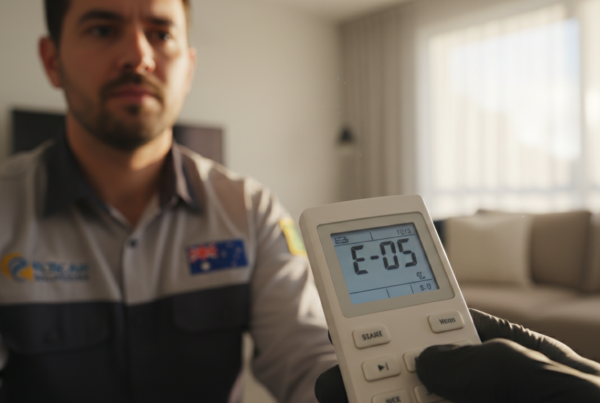
Confirm no error codes are displayed on controller (consult manufacturer manual for specific fault code meanings) - ✓
Test circuit breakers and isolator switches are in ON position and not tripped (AS/NZS 3000:2018 compliant installations)
Refrigerant Leaks and Low Gas Pressure
The Australian Refrigeration Council reports that refrigerant leaks are the cause of approximately 60% of air conditioning cooling failures, requiring ARC Tick certified technicians for legal repair under the Ozone Protection and Synthetic Greenhouse Gas Management Act 1989. Refrigerant doesn’t deplete through normal operation—any pressure loss indicates a leak in the sealed system requiring professional refrigerant leak detection and repair procedures.
Common leak points include flared connections at indoor and outdoor units, brazed joints in refrigerant lines, and the evaporator or condenser coils themselves due to corrosion or vibration damage. Signs of refrigerant loss include ice formation on refrigerant lines or evaporator coils, oil residue around connections, hissing sounds from the refrigerant circuit, and gradually diminishing cooling capacity over weeks or months rather than sudden failure.
Standards Australia AS/NZS 5149.1:2016 mandates that all refrigerant handling, leak detection, and system recharging must be performed by licensed technicians with current ARC Tick certification to ensure environmental compliance and system safety. Vital Air Conditioning technicians use electronic leak detectors and nitrogen pressure testing to locate even microscopic leaks before performing repairs and recharging to manufacturer specifications.
Blocked or Dirty Air Filters Restricting Airflow
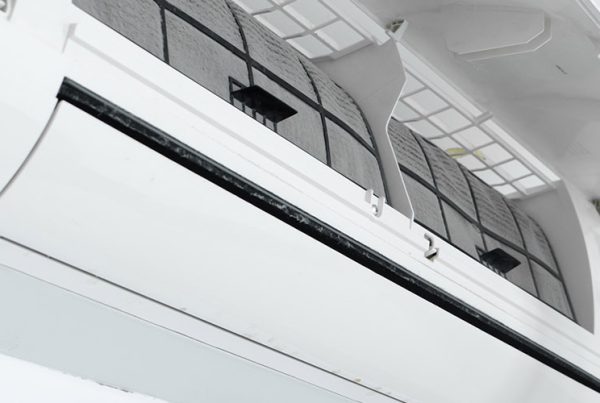
Severely blocked air filters represent the most common user-serviceable cause of warm air delivery. Filters clogged with dust, pet hair, and airborne particles restrict airflow across the evaporator coil, preventing adequate heat exchange. As airflow drops below design specifications (typically 350-400 cubic metres per hour per kilowatt of cooling capacity), the evaporator coil temperature falls below freezing, causing ice formation that completely blocks airflow and cooling.
AIRAH (Australian Institute of Refrigeration, Air Conditioning and Heating) data indicates that regular maintenance including filter changes and coil cleaning can improve system efficiency by 15-25% and prevent 80% of common cooling failures. During Sydney’s peak summer months, filters in homes with pets or high occupancy require inspection every 4-6 weeks, with replacement every 3-6 months depending on indoor air quality and filter type.
For detailed guidance on proper filter maintenance procedures and replacement schedules, consult your system’s user manual for filter location and type. Most split systems use washable mesh filters accessible behind the front panel, while ducted systems may use disposable pleated filters requiring replacement rather than cleaning.
- ✓
Inspect and clean or replace air filters if visibly dirty or blocked (check manufacturer specifications for filter type) - ✓
Check for ice formation on indoor evaporator coils or refrigerant lines indicating airflow restriction or refrigerant issues
Compressor Failure or Malfunction
The compressor represents the heart of the refrigeration cycle, and its failure produces the classic symptom of an outdoor unit that runs but delivers no cooling. Compressor failures manifest in several ways: complete electrical failure where the unit won’t start, mechanical seizure producing loud grinding or clicking sounds, or loss of compression where the motor runs but fails to pressurize refrigerant adequately.
Scroll compressors in residential systems typically operate at 2.5-7.5 kW for standard split systems, with inverter-driven models modulating capacity between 30-100% to match cooling demand. When these units fail, you’ll observe the outdoor fan running normally while the compressor remains silent or produces abnormal sounds. Electrical failures often trip the circuit breaker or isolator switch required under AS/NZS 3000:2018 (Electrical installations — known as the Australian/New Zealand Wiring Rules).
Compressor failure causes include prolonged operation with low refrigerant charge (causing overheating), electrical power surges, contaminated refrigerant oil, or simply age-related wear in systems over 10-15 years old. When you notice warning signs that indicate immediate professional attention, immediate shutdown prevents secondary damage to other system components.
Outdoor Unit Issues: Condenser Coil Problems
The outdoor condenser coil must reject heat absorbed from indoor air to the outside environment. When this heat exchange fails due to blocked coils, failed condenser fan, or inadequate clearance around the unit, high-pressure refrigerant can’t condense properly, reducing or eliminating cooling capacity. Sydney’s climate presents specific challenges with airborne dust, pollen, and leaf debris accumulating on condenser fins during spring and summer.
Condenser coils require minimum 300mm clearance on all sides for adequate airflow, with manufacturers specifying 500mm for optimal performance. Units installed against walls, under decks, or surrounded by vegetation experience reduced heat rejection, particularly during extreme heat days when ambient temperatures exceed 35°C. For seasonal factors affecting cooling performance in Sydney’s climate, condenser maintenance becomes critical during peak demand periods.
Condenser fan failures prevent airflow across coils even when the compressor operates normally. You can diagnose this by observing whether the outdoor fan spins when the system runs. Failed capacitors (the most common electrical fault) prevent fan motor startup, while seized bearings cause the motor to hum without rotating. Both conditions require licensed electrical work under AS/NZS 3000:2018 standards.
- ✓
Verify outdoor unit is running when indoor unit operates — listen for compressor hum and feel for warm air discharge - ✓
Examine outdoor condenser coils for debris, leaf buildup, or blockage restricting airflow around the unit
Electrical Faults: Reversing Valve and Control Board Failures
Reverse-cycle air conditioners use a four-way reversing valve to switch refrigerant flow direction between heating and cooling modes. When this valve fails in the heating position or becomes stuck mid-position, the system delivers warm air despite the controller being set to cooling mode. Reversing valve failures produce distinctive symptoms: the outdoor unit runs normally, but indoor air temperature remains neutral or slightly warm rather than cold.
Electronic control boards manage compressor operation, fan speeds, defrost cycles, and safety shutdowns. Circuit board failures can prevent compressor activation while allowing fans to run, creating the appearance of normal operation without cooling. Power surges, moisture ingress, and component age cause control board failures requiring replacement rather than repair in most cases.
All electrical diagnostics and repairs must comply with AS/NZS 3000:2018 (Electrical installations) requirements. Licensed electricians or HVAC technicians with electrical qualifications must perform voltage testing, capacitor replacement, control board diagnosis, and wiring repairs. Attempting DIY electrical work on air conditioning systems violates Australian electrical safety regulations and voids manufacturer warranties.
When to Call a Licensed Technician vs DIY Fixes
Understanding the boundary between user-serviceable maintenance and work requiring licensed professionals protects your safety, equipment warranty, and legal compliance. The following table clarifies which tasks homeowners can safely perform versus those requiring ARC Tick certified technicians.
For a comprehensive diagnostic guide for other common AC malfunctions, understanding these boundaries prevents equipment damage and maintains warranty coverage. When in doubt, professional diagnosis costs less than repairs needed after incorrect DIY attempts.
Preventative Maintenance to Avoid Warm Air Issues
Systematic preventative maintenance eliminates 80% of cooling failures before they occur. Professional servicing addresses issues invisible to homeowners: refrigerant pressure verification, electrical connection tightening, condensate drain cleaning, and early detection of component wear before complete failure.
For recommended service intervals based on system type and usage, residential split systems require annual professional maintenance before summer, while commercial installations and systems in harsh environments benefit from bi-annual servicing. Ducted systems with multiple zones require more frequent attention due to increased component complexity.
- 1
Monthly Filter InspectionCheck filters every 4-6 weeks during peak summer usage, cleaning or replacing as needed to maintain design airflow across evaporator coils.
- 2
Outdoor Unit ClearanceMaintain 500mm clearance around condenser unit, removing leaves, grass clippings, and debris that restrict airflow and reduce heat rejection capacity.
- 3
Annual Professional ServiceSchedule pre-summer servicing including refrigerant pressure testing per AS/NZS 5149.1:2016, electrical connection inspection per AS/NZS 3000:2018, and coil cleaning by ARC Tick certified technicians.
- 4
Condensate Drain VerificationCheck that condensate drains freely from indoor unit during operation, preventing overflow that damages ceilings and indicates blockage requiring professional clearing.
- ✓
Schedule professional inspection if system is over 12 months since last service or shows any refrigerant leak signs (oil residue, hissing sounds)
By the Numbers
- STATAccording to Energy Rating Australia, air conditioners account for approximately 20-50% of household electricity use during summer months in NSW, making inefficient operation from warm air faults a significant cost burden.
- STATThe Australian Refrigeration Council reports that refrigerant leaks are the cause of approximately 60% of air conditioning cooling failures, requiring ARC Tick certified technicians for legal repair under the Ozone Protection and Synthetic Greenhouse Gas Management Act 1989.
- STATAIRAH (Australian Institute of Refrigeration, Air Conditioning and Heating) data indicates that regular maintenance including filter changes and coil cleaning can improve system efficiency by 15-25% and prevent 80% of common cooling failures.
Vital Air Conditioning has diagnosed and repaired air conditioning cooling failures across Sydney for over 25 years. Our ARC Tick certified technicians provide same-day service with comprehensive refrigerant leak testing, compressor diagnostics, and all repairs backed by our 5-year workmanship warranty.
Frequently Asked Questions About Air Conditioners Blowing Warm Air
Why is my air conditioner blowing warm air but the fan is running?
This typically indicates either refrigerant loss requiring regas by an ARC Tick certified technician, or compressor failure where the outdoor unit runs but doesn’t compress refrigerant. Under AS/NZS 5149.1:2016 (Refrigerating systems and heat pumps — Safety and environmental requirements), only licensed technicians can legally handle refrigerant systems in Australia.
Can low refrigerant cause my AC to blow warm air?
Yes — refrigerant is the heat transfer medium in vapour-compression cycles, and insufficient charge prevents adequate heat absorption from indoor air. Refrigerant doesn’t deplete through normal use; low levels always indicate a leak requiring professional repair and pressure testing to AS/NZS 5149 standards before recharging.
How much does it cost to fix an air conditioner blowing warm air in Sydney?
Costs range from $0 (thermostat battery or filter cleaning) to $180-350 for refrigerant leak detection and regas, or $800-2,500+ for compressor replacement depending on system capacity. ARC Tick licensed technicians must provide itemised quotes including refrigerant handling compliance costs under Australian Refrigeration Council regulations.
Should I turn off my air conditioner if it’s blowing warm air?
Yes — continuing to run a malfunctioning system can cause compressor damage, increased electricity costs, and potential electrical hazards. Switch off at the isolator (required under AS/NZS 3000:2018 Electrical installations) and contact a licensed technician to diagnose before further operation.
Can a dirty filter make my air conditioner blow warm air?
Severely blocked filters reduce airflow across the evaporator coil, preventing adequate heat exchange and potentially causing the coil to ice over, which blocks cooling entirely. AIRAH recommends filter inspection every 4-6 weeks during peak Sydney summer usage, with replacement every 3-6 months depending on indoor air quality.