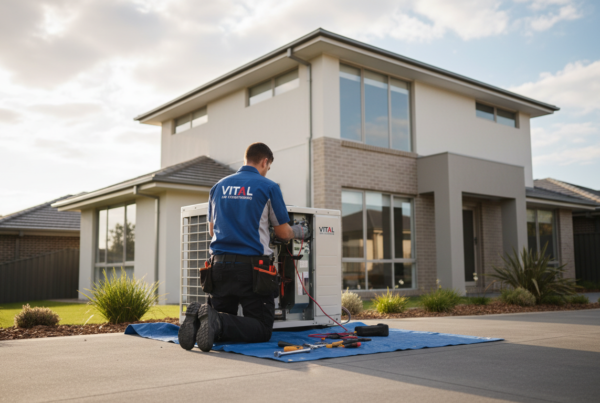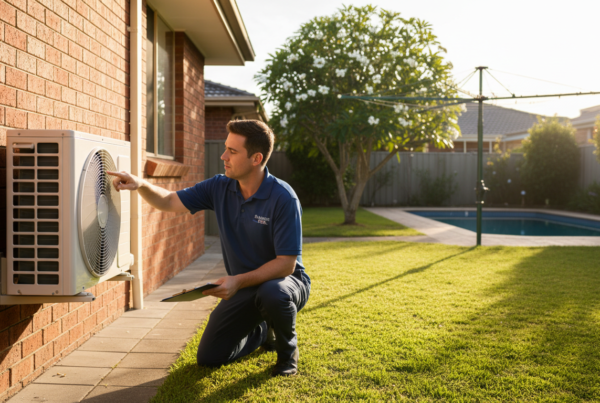

It’s 2 a.m. on a sweltering February night in Moorebank, and your air conditioner has stopped cooling. You’re facing a decision that thousands of Sydney homeowners confront each summer: should you invest in air conditioner repair, or is it time to replace the entire system? This decision involves more than just the immediate quote from your technician—it requires understanding your system’s age, efficiency, refrigerant type, and the true cost-benefit calculation that determines which option protects your investment.
Over 25 years servicing Sydney homes, Vital Air Conditioning has guided countless homeowners through this exact scenario. The repair-or-replace decision isn’t always straightforward, but understanding the technical and financial factors makes the choice clear. This guide provides the framework our ARC Tick certified technicians use when assessing whether your system warrants repair or replacement.
Understanding the True Age of Your Air Conditioning System
The Australian Bureau of Statistics (ABS) reports that the average lifespan of residential air conditioning systems in Australia is 10-12 years, with maintenance frequency being the primary factor affecting longevity. However, chronological age tells only part of the story when evaluating repair viability.
Split systems typically last 10-15 years with proper maintenance, while ducted systems may reach 15-20 years. Your system’s effective age depends on several factors beyond the installation date. Units in coastal areas like Moorebank experience accelerated corrosion from salt air, particularly affecting outdoor condenser coils and cabinet metalwork. Systems running continuously during Sydney’s extended summer periods accumulate operational hours faster than those in temperate climates.
Maintenance history dramatically affects system longevity. A 12-year-old unit with annual professional servicing may have more serviceable life remaining than a neglected 8-year-old system with clogged filters and corroded components. The recommended air conditioner servicing frequency of at least annually directly correlates with whether repair investments make financial sense.
Manufacturing date codes on the outdoor unit nameplate provide the actual age, which sometimes differs from installation dates if the unit sat in inventory. Systems manufactured before 2010 operate under older efficiency standards and use refrigerants now phased out under the Montreal Protocol, making age a critical compliance factor beyond just mechanical wear.
Cost Analysis: Repair vs Replace Calculations for Sydney Homeowners
The fundamental calculation for repair-versus-replacement decisions follows the 50 percent rule: if the repair cost exceeds half the price of a comparable new system, replacement typically offers better value. For Sydney homeowners, this threshold usually sits around $2,500-$3,000 for split systems and $5,000 for ducted installations.
Several factors that affect air conditioner repair costs in Sydney include component availability, refrigerant type, and labour complexity. Compressor replacement represents the most significant single repair, typically costing $1,800-$3,500 depending on system capacity. When this failure occurs in a system over 10 years old, the calculation shifts decisively toward replacement.
By the Numbers
- STATThe Equipment Energy Efficiency (E3) Program reports that air conditioners account for approximately 23% of household electricity consumption in NSW, making efficiency upgrades financially significant for Sydney homeowners
- STATAccording to the Australian Refrigeration Council (ARC), systems over 10 years old are 30-50% less efficient than current minimum energy performance standards (MEPS) under AS/NZS 3823.2:2013 (Performance of electrical appliances — Air conditioners and heat pumps)
Beyond the immediate repair quote, calculate the total cost of ownership over the next five years. An older system requiring a $2,000 repair today may need additional repairs within 2-3 years, while a new system carries manufacturer warranty coverage (typically 5 years on parts and labour) that eliminates repair costs during that period.
Energy cost differentials significantly impact this calculation. A system operating 30-50 percent less efficiently than modern standards wastes $200-$400 annually in Sydney’s climate. Over five years, this represents $1,000-$2,000 in additional running costs that effectively increase the true cost of choosing repair over replacement.
Insurance and compliance factors also affect cost analysis. Repairs that don’t meet AS/NZS 5149.1:2016 (Refrigerating systems and heat pumps — Safety and environmental requirements) may void insurance coverage in the event of property damage or refrigerant leak incidents. ARC Tick certified technicians must ensure all refrigerant work complies with current standards, which sometimes makes compliant repair more expensive than replacement with a modern system.
Common Repairable Issues vs Terminal Failures
Not all air conditioner failures signal the end of system life. Understanding which common air conditioning problems warrant repair versus replacement helps homeowners make informed decisions when their technician presents options.
Repairable issues that justify investment in systems under 10 years old include capacitor failures ($180-$350), fan motor replacement ($400-$800), thermistor sensor faults ($200-$400), and refrigerant top-ups from minor leaks ($350-$600 depending on refrigerant type). These component failures don’t indicate systemic deterioration and can be addressed cost-effectively when the rest of the system remains sound.
Electrical control board failures ($500-$1,200) fall into a grey area. For systems under 7 years old, replacement makes sense. For older systems, board failure often precedes other component failures within 12-24 months, making this repair a temporary solution rather than a long-term fix.
Terminal failures that typically justify replacement include compressor failure in systems over 8 years old, refrigerant circuit leaks requiring extensive brazing work under AS/NZS 5149.2:2016 (Refrigerating systems and heat pumps — Safety and environmental requirements Part 2: Design, construction, testing, marking and documentation), heat exchanger corrosion or cracking, and multiple simultaneous component failures indicating end-of-life deterioration.
Compressor failure represents the most significant decision point. The compressor is the heart of the refrigeration cycle, and replacement costs approach 50-70 percent of new system prices. When compressor failure occurs in systems over 10 years old, other components have experienced similar operational stress, making additional failures likely within the next 2-3 years.
Refrigerant leaks require careful assessment. Small leaks from service port valve cores or flare connections can be repaired economically. Leaks within the sealed refrigerant circuit requiring brazing work become expensive quickly, particularly when leak detection, nitrogen pressure testing, vacuum evacuation, and refrigerant recharging are factored into total costs. For R22 systems, any refrigerant leak effectively mandates replacement due to refrigerant unavailability.
When Replacement Is the Better Investment
Certain conditions make replacement the clear choice regardless of immediate repair costs. Recognising these signs your air conditioner needs replacing prevents throwing good money after bad on systems approaching end of life.
Systems over 12 years old requiring any major repair (compressor, heat exchanger, extensive refrigerant work) should be replaced. At this age, even if the immediate repair succeeds, other components have similar operational hours and will likely fail within 2-3 years. The warranty on repair work (typically 12 months) expires well before the system reaches a reasonable return on investment.
Any system using R22 refrigerant should be replaced regardless of age or repair cost. R22 (HCFC-22) was completely phased out in Australia on 1 January 2020 under the Ozone Protection and Synthetic Greenhouse Gas Management Act 1989. While existing systems can continue operating, repairs requiring refrigerant must use reclaimed R22, which has become prohibitively expensive and scarce. No ARC Tick certified technician can legally install new R22 systems, making replacement with R410A or R32 systems the only compliant long-term solution.
Systems that have required multiple repairs over the past 2-3 years indicate systemic deterioration. Once a system enters the failure cascade phase, where one component failure follows another in relatively quick succession, replacement becomes inevitable. Continuing to repair simply delays the replacement decision while accumulating costs that could have been applied to a new system.
Incorrectly sized systems that have never adequately cooled the space should be replaced rather than repaired. No amount of repair work fixes fundamental capacity mismatch. Sydney homes typically require 120-150 watts of cooling capacity per square metre depending on insulation, orientation, and glazing. A system undersized by 20 percent or more runs continuously, wears prematurely, and wastes energy regardless of component condition.
Systems with energy ratings below 3 stars waste substantial money annually. Modern systems achieving 5-star ratings or SEER values above 5.0 reduce running costs by 30-50 percent compared to older units. For Sydney households running air conditioning 4-6 months annually, this efficiency difference represents $200-$400 in annual savings that accumulate to $2,000-$4,000 over a 10-year system life.
Energy Efficiency Considerations for Sydney Homes
Energy efficiency represents one of the most compelling arguments for replacement over repair in older systems. The benefits of high-efficiency air conditioners extend beyond environmental considerations to deliver measurable financial returns for Sydney homeowners.
AS/NZS 3823.2:2013 (Performance of electrical appliances — Air conditioners and heat pumps) establishes minimum energy performance standards (MEPS) that have progressively tightened since 2004. Systems manufactured before 2013 operate well below current efficiency standards. A 10-year-old 5kW split system typically achieves a SEER rating of 3.0-3.5, while modern inverter systems reach SEER values of 5.0-7.0.
This efficiency difference translates directly to running costs. According to the Equipment Energy Efficiency (E3) Program, upgrading from a 2-star to 5-star rated 5kW system saves approximately $200-$350 annually in Sydney’s climate zone. Over a 10-year lifespan, this represents $2,000-$3,500 in savings that offset a significant portion of replacement costs.
Sydney’s climate zone and summer peak demand pricing amplify efficiency benefits. Air conditioners account for approximately 23 percent of household electricity consumption in NSW according to the E3 Program, with the majority concentrated in December through March when electricity rates peak. Modern inverter technology reduces consumption during these expensive periods by modulating compressor speed rather than cycling on and off.
Inverter systems also provide superior humidity control in Sydney’s humid summers. By running continuously at lower speeds rather than cycling, inverter units remove more moisture from indoor air, improving comfort at higher thermostat settings. This allows homeowners to set temperatures 1-2 degrees higher while maintaining comfort, further reducing energy consumption.
When calculating repair-versus-replacement decisions, factor in the efficiency differential over the expected remaining system life. A $2,500 repair on a 10-year-old system with 3-5 years remaining life costs an additional $600-$1,750 in wasted energy compared to a new high-efficiency system. This hidden cost makes the true cost of repair $3,100-$4,250 when energy waste is included.
The Role of Maintenance History in Your Decision
Maintenance history dramatically affects whether repair investment makes sense. Well-maintained systems justify repair costs that would be questionable for neglected units of the same age. Understanding how maximizing your air conditioning system’s lifespan through proper maintenance influences the repair-or-replace decision helps homeowners evaluate their specific situation.
Systems with documented annual professional servicing demonstrate predictable component condition. During routine maintenance, technicians identify developing issues before they cause failures, clean heat exchangers to maintain efficiency, and verify refrigerant charge per AS/NZS 5149.2:2016 requirements. This preventive approach extends component life and makes individual component failures less likely to indicate systemic deterioration.
A 12-year-old system with complete service records showing annual maintenance, no previous major repairs, and clean coils may warrant a $1,500 repair that would be questionable for a neglected 9-year-old unit. The maintenance history provides confidence that other components remain serviceable and the repair investment will deliver reasonable return.
Conversely, systems with no maintenance history or gaps of 3-4 years between services accumulate damage that accelerates failure. Clogged filters force the system to work harder, increasing compressor strain. Dirty coils reduce heat transfer efficiency, causing higher operating temperatures that degrade refrigerant and lubricant. Unchecked refrigerant leaks allow moisture into the sealed system, corroding internal components.
When Vital Air Conditioning technicians assess repair viability, maintenance history factors heavily into recommendations. A neglected system requiring major repair typically receives a replacement recommendation even if technically repairable, because the lack of maintenance indicates other components have also deteriorated beyond what inspection reveals.
For homeowners facing the repair-or-replace decision with poorly maintained systems, replacement offers an opportunity to start fresh with a proper maintenance schedule. Modern systems with 5-year warranties protect the investment, and establishing annual servicing from installation maximises the new system’s lifespan and efficiency.
Refrigerant Type and Compliance Factors
Refrigerant type represents a critical factor in repair-versus-replacement decisions that many homeowners overlook. Compliance requirements under AS/NZS 5149.1:2016 (Refrigerating systems and heat pumps — Safety and environmental requirements) and the Montreal Protocol phase-out schedule make refrigerant considerations as important as mechanical condition.
R22 refrigerant (HCFC-22) was completely phased out in Australia on 1 January 2020. Systems using R22 can continue operating, but no new R22 can be imported or manufactured. Repairs requiring refrigerant top-up must use reclaimed R22, which has become extremely expensive and increasingly scarce. The Australian Refrigeration Council (ARC) prohibits ARC Tick certified technicians from installing any new equipment using R22, making this refrigerant type a clear replacement indicator regardless of system age or repair cost.
R410A refrigerant currently dominates residential systems installed between 2010 and 2020. This refrigerant remains fully supported with no phase-out scheduled in the immediate future, making R410A systems viable repair candidates when other factors support that decision. R410A operates at higher pressures than R22, requiring specific components and brazing procedures under AS/NZS 5149.2:2016 when refrigerant circuit repairs are needed.
R32 refrigerant represents the current standard for new installations. R32 offers superior efficiency and lower global warming potential compared to R410A, aligning with Australia’s commitment to reducing greenhouse gas emissions. When replacing an older system, R32 units provide the best long-term compliance position and efficiency performance.
Refrigerant handling requires ARC Tick certification under Australian law. Any work involving refrigerant recovery, evacuation, or charging must be performed by licensed technicians who maintain current certification and use calibrated equipment. Non-compliant refrigerant work voids manufacturer warranties, violates environmental regulations, and creates liability for property owners. This compliance requirement makes DIY repair impossible and necessitates professional assessment of refrigerant-related issues.
When assessing repair viability, refrigerant type often determines the decision. R22 systems should be replaced. R410A systems under 10 years old with good maintenance history can be repaired cost-effectively. R32 systems represent current technology and warrant repair when under warranty or relatively new.
Why Professional Assessment Matters
The repair-or-replace decision requires technical expertise that extends beyond surface-level diagnosis. Understanding the importance of professional AC installation and repair helps homeowners recognise when expert assessment provides value beyond the immediate service call.
ARC Tick certified technicians bring diagnostic capabilities that reveal underlying issues invisible to homeowners. Refrigerant pressure and temperature measurements indicate compressor efficiency and heat exchanger condition. Electrical current draw reveals motor bearing wear before catastrophic failure. Insulation resistance testing identifies developing electrical faults that could cause fires or component damage.
Professional assessment also considers factors beyond the immediate failure. A technician evaluating a capacitor failure examines why the capacitor failed—was it normal end-of-life wear, or did compressor overload from dirty coils cause premature failure. This diagnostic depth determines whether the repair addresses the root cause or merely treats a symptom.
Compliance verification represents another critical professional service. Technicians ensure repairs meet AS/NZS 5149 requirements for refrigerant handling, electrical work complies with AS/NZS 3000 (Electrical installations), and the repaired system operates within manufacturer specifications. Non-compliant repairs create liability and void warranties, making professional certification essential.
Honest professional assessment provides the cost-benefit analysis homeowners need for informed decisions. Experienced technicians have seen thousands of similar failures and can predict with reasonable accuracy whether a repair will deliver 5+ years of service or represent a temporary fix before inevitable replacement. This expertise prevents homeowners from making expensive mistakes based on incomplete information.
Vital Air Conditioning’s approach prioritises transparent assessment over sales pressure. Our technicians provide detailed explanations of failure causes, realistic repair longevity estimates, and side-by-side cost comparisons of repair versus replacement options. This advisory approach, refined over 25+ years serving Sydney homeowners, ensures customers make decisions aligned with their specific circumstances and budget.
Making the Final Decision: A Practical Framework
With all factors considered, homeowners need a practical framework for making the final repair-or-replace decision. This systematic approach weighs the technical, financial, and compliance factors into a clear recommendation.
- ✓
System age: Over 10 years significantly increases likelihood that replacement is more cost-effective than major repairs - ✓
Repair cost threshold: If quoted repair exceeds 50% of comparable new system cost, replacement typically offers better value - ✓
Refrigerant type: R22 systems should be replaced due to refrigerant phase-out; R410A and R32 systems have ongoing support - ✓
Energy rating: Current system below 3-star rating wastes $200-$400 annually compared to modern 5-star rated equivalents - ✓
Maintenance history: Well-maintained systems with complete service records justify repair investment; neglected systems favor replacement - ✓
Warranty status: Systems within manufacturer warranty period (typically 5 years) should be repaired; out-of-warranty systems over 8 years favor replacement - ✓
Capacity match: If current system is incorrectly sized for space, replacement with properly calculated kW capacity solves chronic performance issues
Apply this framework systematically. Start with refrigerant type—R22 systems receive automatic replacement recommendation. Next evaluate age—systems over 12 years old requiring major repairs should be replaced. Then apply the 50 percent cost rule, factoring in energy waste over remaining system life.
Consider your specific circumstances. Homeowners planning to sell within 2-3 years may choose minimal repair to maintain functionality rather than investing in replacement they won’t fully benefit from. Conversely, homeowners planning long-term occupancy benefit from replacement efficiency savings and warranty protection.
Budget constraints sometimes necessitate repair even when replacement would be optimal. In these situations, ensure the repair meets compliance requirements and understand it represents a temporary solution. Plan for replacement within 2-3 years and budget accordingly rather than being caught unprepared when the next failure occurs.
The repair-or-replace decision ultimately balances immediate financial capacity against long-term value. Professional assessment from ARC Tick certified technicians provides the technical foundation for this decision, but homeowners must weigh their specific circumstances, budget, and timeline to reach the right conclusion for their situation.
Frequently Asked Questions
How old does an air conditioner need to be before replacement makes more sense than repair?
According to industry standards, split systems typically last 10-15 years with proper maintenance, while ducted systems may reach 15-20 years. If your unit is over 10 years old and requires repairs costing more than 50% of replacement value, replacement is usually more cost-effective. Systems using R22 refrigerant (phased out under the Montreal Protocol) should be replaced regardless of age due to refrigerant unavailability and compliance requirements under AS/NZS 5149.1:2016 (Refrigerating systems and heat pumps — Safety and environmental requirements).
What repair costs justify replacing an air conditioner instead?
The $5,000 rule applies in Sydney: if repair costs exceed $5,000 or represent more than 50% of a new system’s price, replacement is typically justified. Compressor replacement ($1,800-$3,500), refrigerant circuit repairs requiring brazing under AS/NZS 5149, or multiple simultaneous component failures indicate systemic deterioration. ARC Tick licensed technicians must assess whether repairs meet current Australian Standards, as non-compliant repairs void warranties and insurance coverage.
Does a more energy-efficient air conditioner pay for itself in Sydney?
Yes, particularly for Sydney’s climate. A modern inverter system with SEER rating above 5.0 can reduce running costs by 30-50% compared to units over 10 years old. According to the Equipment Energy Efficiency (E3) Program, upgrading from a 2-star to 5-star rated 5kW system saves approximately $200-$350 annually in Sydney’s climate zone. Over a 10-year lifespan, this represents $2,000-$3,500 in savings, offsetting a significant portion of replacement costs.
Can I repair an air conditioner that uses old R22 refrigerant?
R22 refrigerant (HCFC-22) was phased out in Australia on 1 January 2020 under the Ozone Protection and Synthetic Greenhouse Gas Management Act 1989. While existing systems can continue operating, no new R22 can be imported or manufactured. Repairs requiring refrigerant top-up must use reclaimed R22 (extremely expensive and scarce) or require full system replacement. ARC Tick certified technicians cannot legally install systems using banned refrigerants, making replacement with R32 or R410A systems the only compliant long-term solution.
Should I repair my air conditioner if it still cools but runs constantly?
Continuous operation despite reaching set temperature indicates reduced capacity from refrigerant loss, compressor wear, or fouled heat exchangers. This condition increases energy consumption by 40-60% and accelerates component failure. If the system is under 7 years old, cleaning coils and checking refrigerant charge per AS/NZS 5149.2:2016 may restore efficiency. For systems over 10 years old exhibiting this symptom, replacement with a correctly-sized modern inverter unit provides better long-term value than repeated repairs to a declining system.
Vital Air Conditioning’s ARC Tick certified technicians provide honest repair-or-replace assessments backed by 25+ years serving Sydney homeowners. We offer transparent pricing, 5-year warranty on installations, and same-day service across Moorebank and surrounding suburbs. Contact us for a no-obligation evaluation of your system.