
The Australian Institute of Refrigeration, Air Conditioning and Heating (AIRAH) reports that 68% of summer AC failures result from issues detectable during pre-season inspection, including refrigerant undercharge and blocked condensate drains. For Sydney homeowners, the difference between reliable cooling during February heatwaves and mid-summer breakdowns often comes down to proper air conditioner maintenance completed before peak demand begins. Unlike the comprehensive year-round maintenance checklist that addresses ongoing system hygiene and general performance, pre-summer preparation focuses specifically on load-testing, refrigerant charge verification, and electrical connection integrity under the sustained high-temperature conditions typical of Sydney’s December to February period when ambient temperatures regularly exceed 32°C.
This seasonal guide distinguishes between routine maintenance and the specific preparation requirements that ensure your air conditioning system delivers reliable cooling capacity when you need it most. We’ll cover safe DIY checks homeowners can perform, identify when ARC Tick certified technicians are legally required, and explain the technical procedures that draw on Vital Air Conditioning’s 25 years of preparing Sydney systems for summer demand.
Why Pre-Summer Air Conditioner Maintenance Differs from Regular Servicing
Regular maintenance follows AS/NZS 3666.2 (Air-handling and water systems of buildings—Microbial control) to address hygiene concerns, filter replacement, and general operational checks regardless of season. Pre-summer preparation adds specific load-testing protocols that verify your system can sustain cooling output during extended operation at design capacity. When outdoor temperatures reach 35-38°C during Sydney heatwaves, air conditioning systems operate continuously for 8-12 hours, placing maximum stress on compressors, refrigerant circuits, and electrical connections.
According to Energy Rating Australia, air conditioners account for approximately 40% of household electricity use during Sydney summer months, making pre-season efficiency checks critical for cost control. Systems with marginal refrigerant charge or restricted airflow may function adequately during mild weather but fail to maintain set temperatures when ambient conditions exceed design parameters. The most common AC failures during Sydney summers stem from refrigerant leaks that develop slowly over months, electrical connection degradation from thermal cycling, and condensate drainage blockages that trigger safety shutdowns under high humidity loads.
Pre-summer preparation specifically addresses these failure modes through refrigerant pressure testing per AS/NZS 1677.2 (Refrigerating systems—Safety requirements), electrical safety verification to AS/NZS 3000 (Electrical installations—Wiring rules), and condensate flow testing under simulated peak load conditions. This targeted approach identifies components operating at marginal performance levels before they fail during peak demand periods when repair wait times extend to 5-7 days.
When to Schedule Your Pre-Summer Aircon Maintenance in Sydney
Schedule professional aircon maintenance 4-6 weeks before December to avoid the peak booking period when temperatures first exceed 30°C. October and early November represent the optimal window for pre-summer servicing in Sydney, allowing time to order replacement components if testing reveals worn parts or declining refrigerant charge. By mid-November, HVAC service providers experience booking volumes that increase by 200-300% compared to winter months, with wait times for non-emergency service extending from 2-3 days to 7-10 days.
Early scheduling also allows homeowners to complete DIY preparation tasks during mild weather when testing system operation doesn’t create immediate discomfort if issues emerge. Testing cooling performance during a 22°C October afternoon provides clear diagnostic information without the urgency of a 35°C December heatwave. Vital Air Conditioning has serviced Sydney homes for over 25 years and consistently observes that systems serviced in October-November experience 40-50% fewer mid-summer emergency calls compared to units that receive their first seasonal attention in December or January.
For commercial facilities and multi-system residential properties, begin preparation in September to allow staged servicing across multiple units without disrupting occupancy. Large capacity systems require extended testing periods to verify performance under load conditions, and component lead times for commercial refrigeration equipment can extend to 3-4 weeks for specialist parts.
DIY Pre-Summer Checks: What Homeowners Can Safely Inspect
Homeowners can safely perform several pre-summer checks without specialized equipment or ARC Tick certification. These inspections identify obvious issues and establish baseline performance before professional servicing. Begin with a visual inspection of both indoor and outdoor units, looking for physical damage, pest intrusion, or vegetation growth that restricts airflow. Indoor units should show no signs of water staining around the chassis or on adjacent walls, which indicates condensate drainage problems that worsen under high humidity loads.
Test system operation by setting the thermostat to cooling mode at 22°C and running the unit for 15-20 minutes. Airflow from supply vents should feel consistently cold within 3-5 minutes of compressor startup, with no fluctuation in temperature or intermittent warm air discharge. Unusual sounds including grinding, squealing, or rattling indicate mechanical wear requiring immediate professional attention. If you notice any of these symptoms, refer to our guide on signs your system needs immediate professional attention before attempting further operation.
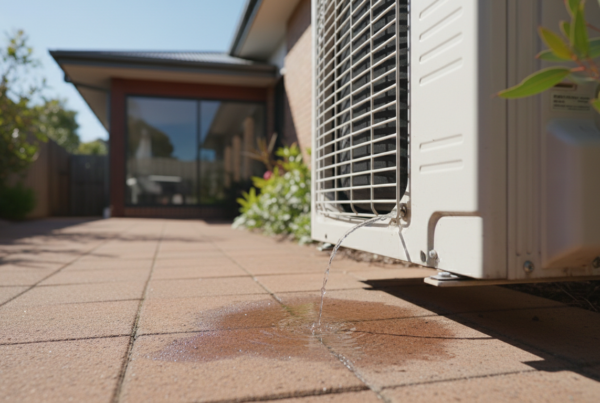
Check thermostat accuracy by placing a separate thermometer 1.5 meters from the indoor unit and comparing readings after 30 minutes of operation. Discrepancies exceeding 2°C suggest calibration drift that causes inefficient cycling and increased energy consumption. Verify that condensate drainage functions correctly by observing the outdoor drain outlet during the test run—you should see water discharge within 10-15 minutes of operation in cooling mode.
Filter Cleaning and Replacement Before Peak Cooling Season
Standards Australia data shows systems operating with dirty filters consume 5-15% more energy while delivering reduced cooling output, with efficiency degradation accelerating under sustained loads above 32°C ambient temperature. Pre-summer filter maintenance represents the single most effective DIY task for maintaining system performance and reducing energy costs during peak demand months. Our detailed filter maintenance guide covers specific procedures for different filter types, but basic pre-summer preparation follows a consistent approach.
Remove washable filters from indoor units and inspect for accumulated dust, lint, and debris. Filters showing heavy contamination or visible damage require replacement rather than cleaning. Wash reusable filters in warm water with mild detergent, rinse thoroughly, and allow complete air drying before reinstallation—installing damp filters promotes mold growth and reduces filtration efficiency. For disposable pleated filters, replacement every 3 months represents the baseline standard, but pre-summer replacement ensures maximum airflow capacity when cooling demand peaks.
High-efficiency particulate filters and electrostatic media require manufacturer-specific maintenance procedures. Systems equipped with HEPA filtration or electronic air cleaners should receive professional servicing as part of pre-summer preparation, as improper cleaning damages filtration media and reduces indoor air quality. During summer operation, inspect filters every 4-6 weeks rather than the standard 8-12 week interval, as increased runtime accelerates dust accumulation and airflow restriction.
Outdoor Unit Preparation: Clearing Debris and Checking Airflow
Outdoor condenser units require unobstructed airflow across heat exchanger coils to reject heat effectively during cooling operation. Clear all vegetation, leaves, grass clippings, and debris within a 500mm radius of the unit, paying particular attention to the air intake sides. Sydney’s spring growth period often results in shrubs and ground cover encroaching on outdoor units installed near garden beds, reducing airflow by 20-30% before homeowners notice performance degradation.
Inspect the condenser coil fins visible through the protective grille for dust accumulation, cottonwood seed buildup, or physical damage. Bent fins reduce heat transfer efficiency and increase compressor operating pressures, leading to premature component failure under sustained summer loads. While homeowners can gently remove surface debris with a soft brush, coil cleaning requires professional equipment and technique to avoid damaging the aluminum fins or copper tubing.
Verify that the outdoor fan blade rotates freely without obstruction and shows no visible cracks or imbalance. During the test run performed earlier, observe fan operation from a safe distance—the blade should spin smoothly at consistent speed without wobbling or unusual vibration. Erratic fan operation indicates bearing wear or motor issues requiring immediate professional service before summer demand begins. Check that the unit sits level on its mounting pad, as settling or movement can stress refrigerant connections and create leak points.
Testing System Performance Under Load Conditions
Pre-summer preparation must include performance testing under conditions that simulate peak demand operation. Run the system continuously for 45-60 minutes on the warmest available day, setting the thermostat 5-6°C below ambient temperature to force maximum compressor output. This extended test reveals marginal performance issues invisible during brief operational checks. Monitor supply air temperature at the indoor vents using a digital thermometer—properly charged systems should deliver air 15-20°C below room temperature within 10 minutes of compressor startup.
Observe whether the system maintains set temperature or cycles frequently without achieving the thermostat target. Short cycling indicates refrigerant charge issues, thermostat calibration problems, or undersized capacity for the cooling load. Systems that run continuously without reaching set temperature suffer from refrigerant undercharge, restricted airflow, or compressor wear. Both conditions require professional diagnosis and repair before summer temperatures arrive.
During the extended test run, check for ice formation on refrigerant lines or the indoor evaporator coil. Ice buildup indicates airflow restriction from dirty filters, low refrigerant charge, or expansion valve malfunction. Our guide on preventing refrigerant coil freeze-ups explains the technical causes, but any ice formation during pre-summer testing requires immediate professional service. Measure power consumption during the test using a plug-in energy monitor for split systems, comparing current draw against nameplate specifications—consumption exceeding rated values by more than 10% suggests mechanical inefficiency or electrical faults.
Professional Pre-Summer Service: What ARC Tick Technicians Check
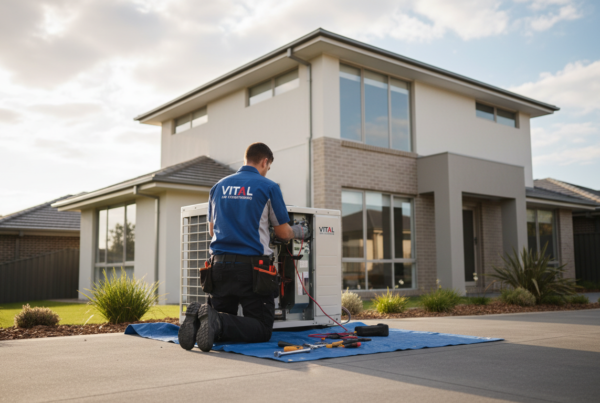
Professional pre-summer servicing by ARC Tick certified technicians addresses system components and performance parameters inaccessible to homeowners. Comprehensive preparation includes refrigerant pressure testing per AS/NZS 1677.2, electrical connection inspection to AS/NZS 3000 standards, and calibrated temperature differential measurements that verify cooling capacity meets manufacturer specifications. These technical procedures require specialized equipment including manifold gauge sets, refrigerant leak detectors, electrical testing instruments, and calibrated thermometers.
ARC Tick technicians inspect electrical contactors, capacitors, and relay components for signs of arcing, pitting, or thermal damage that develops from repeated startup cycles. Capacitor failure represents one of the most common summer breakdown causes, as these components degrade gradually over 3-5 years before failing completely during high-temperature operation. Professional testing measures capacitance values against specifications, identifying marginal components before they fail during peak demand.
Condensate drain systems receive thorough inspection and cleaning, including drain pan treatment with biocide tablets that prevent algae growth during humid summer conditions. Blocked condensate drains trigger float switch safety shutdowns that disable the system until cleared—a common cause of mid-summer service calls that proper pre-season maintenance prevents. Technicians verify drain line pitch and flow rate, clearing any restrictions with compressed air or mechanical cleaning tools.
Vital Air Conditioning’s pre-summer service includes detailed performance documentation that establishes baseline measurements for temperature differential, refrigerant pressures, and electrical consumption. This data provides comparison points for future servicing and helps identify gradual performance degradation before it causes system failure. The comprehensive approach reflects 25 years of experience preparing Sydney systems for summer demand and incorporates energy-efficient operation strategies that reduce running costs during peak consumption months.
Refrigerant Pressure Testing and Leak Detection for Summer Reliability
Refrigerant charge verification represents the most critical technical component of pre-summer preparation. Systems lose refrigerant gradually through microscopic leaks at brazed connections, service ports, and mechanical joints. A 10% reduction in refrigerant charge decreases cooling capacity by up to 40% while increasing compressor operating temperatures and energy consumption. Under AS/NZS 1677.2, only ARC Tick certified technicians may connect manifold gauges to refrigerant circuits or add refrigerant to systems.
Professional refrigerant testing measures suction and discharge pressures under controlled conditions, comparing readings against manufacturer specifications adjusted for ambient temperature. Technicians calculate superheat and subcooling values that indicate precise refrigerant charge status—measurements requiring calibrated instruments and technical training to interpret correctly. Electronic leak detectors scan all refrigerant connections, brazed joints, and heat exchanger circuits for trace refrigerant emissions invisible to visual inspection.
Systems showing refrigerant loss require leak repair before recharging, as simply adding refrigerant to a leaking system wastes expensive refrigerant and fails to address the underlying fault. Common leak points include service port valve cores, brazed joints on refrigerant lines, and heat exchanger tube connections subjected to vibration stress. After leak repair, technicians evacuate the system to remove air and moisture, then recharge to manufacturer specifications using refrigerant recovery equipment that complies with the Ozone Protection and Synthetic Greenhouse Gas Management Act 1989.
Refrigerant handling violations carry significant penalties—up to $13,320 for individuals and $66,600 for corporations—making ARC Tick certification a legal requirement rather than optional qualification. Homeowners who discover cooling performance issues during DIY testing should schedule professional refrigerant testing rather than attempting diagnosis or repair of refrigerant circuits.
Electrical Connection Inspection and Thermostat Calibration
Electrical connections degrade over time from thermal cycling, vibration, and oxidation. Pre-summer inspection per AS/NZS 3000 includes torque verification on all power connections, contactor inspection for pitting or damage, and insulation resistance testing that identifies deteriorating wire insulation before it causes short circuits. Loose connections create resistance that generates heat, leading to terminal damage and potential fire hazards during sustained high-load operation.
Technicians measure voltage and current at the outdoor unit under load conditions, comparing readings against nameplate specifications. Voltage imbalance exceeding 2% between phases on three-phase systems causes motor overheating and premature failure. Single-phase systems showing voltage drop exceeding 5% under load indicate undersized supply circuits or utility supply issues requiring correction before summer demand increases electrical loads across the neighborhood.
Thermostat calibration ensures accurate temperature control and efficient system cycling. Professional calibration compares thermostat readings against precision reference instruments, adjusting sensor calibration to maintain accuracy within 0.5°C. Digital programmable thermostats receive battery replacement and program verification, confirming that scheduled setpoints function correctly. Wireless thermostat systems require signal strength testing and battery condition checks to prevent communication failures during peak demand periods.
Control board inspection identifies capacitor bulging, relay contact wear, and circuit board corrosion that develops in humid coastal environments. Sydney’s proximity to ocean air accelerates corrosion on electronic components, making annual inspection particularly important for systems installed within 5 kilometers of the coast. Protective coatings and corrosion inhibitors applied during pre-summer servicing extend control board lifespan and reduce mid-summer electronic failures.
Creating Your Pre-Summer Air Conditioning Preparation Timeline
Effective pre-summer preparation follows a structured timeline that begins 6-8 weeks before peak demand and continues through the first month of summer operation. This staged approach allows time for component ordering if professional inspection reveals worn parts, and provides opportunity to address issues before they cause system failure during heatwaves. The following checklist organizes preparation tasks by timing and responsibility.
- ✓
Clean or replace air filters 2-4 weeks before December (every 4-6 weeks during summer for optimal performance) - ✓
Clear outdoor unit surrounds of leaves, grass clippings, and vegetation within 500mm radius to ensure unrestricted airflow - ✓
Test system operation on cooling mode for 15-20 minutes, verifying consistent cold air output and absence of unusual noises - ✓
Inspect indoor unit drain outlets for water discharge during test run, confirming condensate drainage functions correctly - ✓
Check thermostat accuracy by comparing displayed temperature against separate thermometer placed 1.5m from unit - ✓
Schedule professional ARC Tick technician inspection 4-6 weeks before peak summer for refrigerant pressure testing and electrical safety checks - ✓
Verify outdoor unit fan blade rotation is smooth and unobstructed, with no visible damage to protective grilles
This systematic approach to pre-summer preparation addresses both homeowner-accessible maintenance tasks and professional service requirements. For a broader perspective on seasonal readiness beyond technical preparation, review our complete summer readiness assessment that covers operational strategies and efficiency optimization.
By the Numbers
- STATAccording to Energy Rating Australia, air conditioners account for approximately 40% of household electricity use during Sydney summer months, making pre-season efficiency checks critical for cost control
- STATThe Australian Institute of Refrigeration, Air Conditioning and Heating (AIRAH) reports that 68% of summer AC failures result from issues detectable during pre-season inspection, including refrigerant undercharge and blocked condensate drains
- STATStandards Australia data shows systems operating with dirty filters consume 5-15% more energy while delivering reduced cooling output, with efficiency degradation accelerating under sustained loads above 32°C ambient temperature
Frequently Asked Questions
How early before summer should I service my air conditioner in Sydney?
Schedule professional aircon maintenance 4-6 weeks before December to avoid the peak booking period when temperatures exceed 30°C. ARC Tick licensed technicians can identify refrigerant leaks, electrical faults, and worn components before system demand increases, preventing mid-summer breakdowns when repair wait times extend to 5-7 days. October and early November represent the optimal window for Sydney homes, allowing time to order replacement parts if testing reveals components operating at marginal performance levels.
What’s the difference between regular maintenance and pre-summer preparation?
Pre-summer preparation focuses specifically on load-testing cooling capacity, verifying refrigerant charge meets manufacturer specifications under AS/NZS 1677.2 (Refrigerating systems—Safety requirements), and inspecting components most stressed during extended high-temperature operation. Regular maintenance follows AS/NZS 3666.2 (Air-handling and water systems—Microbial control) for hygiene and general performance, regardless of season. Pre-summer servicing adds refrigerant pressure testing, electrical connection torque verification to AS/NZS 3000 standards, and performance testing under simulated peak load conditions that reveal marginal issues invisible during routine checks.
Can I do pre-summer air conditioner maintenance myself?
Homeowners can safely clean or replace filters, clear outdoor unit surrounds of vegetation within 500mm, and verify airflow from indoor vents. However, refrigerant handling, electrical testing, and pressure diagnostics require ARC Tick certification under the Ozone Protection and Synthetic Greenhouse Gas Management Act 1989, as improper refrigerant release carries penalties up to $13,320 for individuals. Professional testing includes refrigerant pressure measurement, electrical connection inspection per AS/NZS 3000, and calibrated performance verification that requires specialized equipment and technical training. DIY checks identify obvious issues, but comprehensive pre-summer preparation requires professional service by licensed technicians.
What happens if I skip pre-summer air conditioner maintenance?
Systems operating with restricted airflow from dirty filters can experience 15-25% efficiency loss and compressor strain leading to premature failure. Undetected refrigerant leaks reduce cooling capacity by up to 40% per 10% charge loss, while electrical connection degradation increases fire risk under sustained high-load operation during 35°C+ Sydney heatwaves. The Australian Institute of Refrigeration, Air Conditioning and Heating reports that 68% of summer failures result from issues detectable during pre-season inspection, with repair wait times during peak demand extending to 5-7 days compared to next-day service during off-peak periods.
Vital Air Conditioning has prepared Sydney homes for summer for over 25 years with comprehensive pre-season inspections by ARC Tick certified technicians. Our detailed preparation service includes refrigerant pressure testing, electrical safety verification to AS/NZS 3000 standards, and performance load testing to ensure your system delivers reliable cooling when temperatures peak. Contact our Moorebank team to schedule your pre-summer maintenance and avoid the December rush.