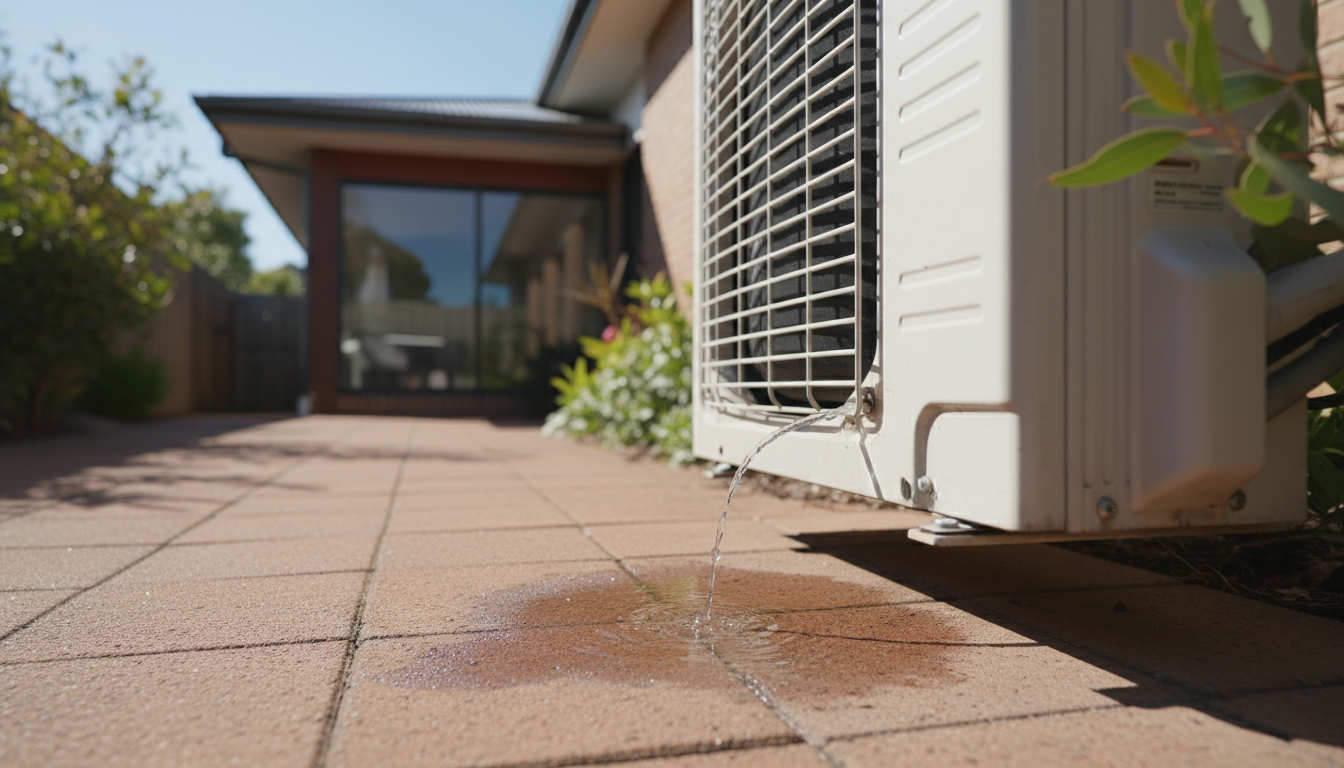
You walk past your outdoor air conditioning unit on a warm Sydney afternoon and notice a steady stream of water dripping from the condensate pipe onto the pavement. Is this normal operation, or does your air conditioner leaking water signal a fault that requires immediate attention? For homeowners across Moorebank and surrounding suburbs, understanding the difference between normal condensate drainage and problematic leaks prevents unnecessary concern while ensuring genuine issues receive prompt professional attention.
External water discharge is an expected byproduct of the refrigeration cycle in split system air conditioners. During cooling operation, the indoor evaporator coil removes both heat and moisture from your home’s air, producing condensate that must drain safely away. However, excessive volume, internal leakage, or sudden changes in drainage patterns indicate faults requiring assessment by an ARC Tick licensed technician.
This diagnostic guide explains how condensate forms during normal operation, identifies warning signs that distinguish routine drainage from system faults, and clarifies when professional intervention becomes necessary to prevent water damage and maintain compliance with AS/NZS 3500.3 (Plumbing and Drainage) requirements.
How Normal Condensate Drainage Works in Split System Air Conditioners
Split system air conditioners operate on the vapour compression refrigeration cycle, which simultaneously cools and dehumidifies indoor air. When warm, humid air passes over the cold evaporator coil inside your indoor unit, moisture in the air condenses into water droplets on the coil surface, similar to condensation forming on a cold glass on a humid day.
These water droplets collect in a drain pan beneath the evaporator coil, then flow through a condensate drain line to an external discharge point. The drainage system relies on gravity, requiring adequate fall as specified in AS/NZS 3500.3, which mandates a minimum gradient of 1:100 to ensure continuous flow and prevent stagnant water that promotes microbial growth.
According to the Australian Institute of Refrigeration, Air Conditioning and Heating (AIRAH), a standard 3.5kW split system air conditioner can produce between 1-2 litres of condensate per hour during typical Sydney summer operation when indoor humidity exceeds 60%. This volume varies based on system capacity, runtime duration, indoor humidity levels, and outdoor temperature conditions. For detailed technical information about how condensate drain systems work, including drain pan construction and pipe sizing requirements, refer to manufacturer specifications and AS/NZS 3500.3 compliance documentation.
The external discharge point typically terminates at ground level near the outdoor unit, though installation configurations vary based on property layout and local council requirements. A steady drip or small stream during cooling operation indicates normal function, particularly during peak summer months when both temperature and humidity levels increase condensate production.
Why Sydney Air Conditioners Produce More Condensate in Summer
Sydney’s humid subtropical climate significantly increases condensate production compared to drier Australian regions. The Bureau of Meteorology records average summer humidity levels between 60-75% across the Sydney basin, with coastal suburbs experiencing even higher moisture content during easterly weather patterns.
Higher humidity means more moisture in the air for your evaporator coil to remove during the cooling process. A split system operating in 70% humidity conditions produces substantially more condensate than the same unit running in 40% humidity, even at identical temperature settings. This explains why homeowners notice increased water discharge during humid summer days and coastal weather events compared to drier autumn and spring conditions.
Understanding how Sydney’s humidity affects your air conditioner helps set realistic expectations for condensate drainage volumes. Systems installed in Moorebank, Liverpool, and surrounding western suburbs often produce peak condensate volumes during January and February when both temperature and humidity reach annual maximums.
Extended runtime also increases total condensate production. A system running continuously for eight hours on a 35-degree day with 65% humidity can discharge 10-15 litres of water, which is entirely normal operation. This volume necessitates proper drainage system design and regular maintenance to prevent blockages that cause overflow and internal leakage.
By the Numbers
- STATAccording to the Australian Institute of Refrigeration, Air Conditioning and Heating (AIRAH), a standard 3.5kW split system air conditioner can produce between 1-2 litres of condensate per hour during typical Sydney summer operation when indoor humidity exceeds 60%
- STATThe Department of Climate Change and Energy Efficiency reports that blocked condensate drains account for approximately 15% of residential air conditioning service calls in NSW, with peak occurrences in January and February
- STATStandards Australia AS/NZS 3500.3 requires all air conditioning condensate drainage systems to discharge to an approved waste disposal point with adequate fall (minimum 1:100 gradient) to prevent backflow and microbial growth
What Causes an Air Conditioner to Leak Water Outside
External water discharge from the condensate drain pipe represents normal operation in most circumstances. However, several fault conditions can alter drainage patterns or increase volume beyond expected parameters.
Normal condensate drainage: A steady drip or small stream from the external drain pipe during cooling operation, proportional to runtime and humidity levels. The discharge should be clear water without odour, and the volume should remain relatively consistent during similar weather conditions.
Blocked drain line: When algae, dirt, or debris accumulates in the condensate pipe, water backs up into the indoor drain pan. If the blockage is partial, you may notice reduced external drainage or intermittent dripping. Complete blockages cause overflow from the indoor unit, resulting in water damage to walls, ceilings, and furnishings.
Frozen evaporator coil: Restricted airflow from dirty filters, blocked return air vents, or low refrigerant charge causes the evaporator coil to freeze. When the ice melts during defrost cycles or after system shutdown, large volumes of water overwhelm the drain pan capacity, causing overflow and excessive external discharge. This condition requires immediate assessment by an ARC Tick licensed technician to diagnose the underlying cause.
Disconnected or damaged drain pipe: Physical damage, poor installation, or degraded pipe connections allow water to leak from the pipe joints rather than discharging at the intended termination point. This creates water pooling near the indoor or outdoor unit and may cause property damage.
For comprehensive diagnosis of these issues, review the common causes of air conditioner water leaks, which details fault mechanisms, diagnostic procedures, and repair requirements for each condition.
When External Water Leakage Becomes a Problem: Warning Signs
While external condensate drainage is normal, specific warning signs indicate fault conditions requiring professional attention. Recognising these symptoms early prevents water damage, system failure, and costly repairs.
Sudden increase in drainage volume: If your system begins discharging significantly more water than previous operation under similar conditions, this may indicate a frozen evaporator coil that is melting, a refrigerant leak causing abnormal coil temperatures, or a partially blocked drain creating intermittent overflow.
Water leaking from the indoor unit: Any water dripping from the indoor unit casing, staining on walls below the unit, or moisture on the indoor unit itself indicates drainage system failure. This requires immediate shutdown and professional assessment to prevent electrical hazards and water damage. The Department of Climate Change and Energy Efficiency reports that blocked condensate drains account for approximately 15% of residential air conditioning service calls in NSW, with peak occurrences in January and February.
No external drainage during operation: If your system runs for extended periods without any visible condensate discharge, particularly during humid weather, the drain line may be completely blocked, causing water to back up into the indoor unit. Modern systems incorporate float switch safety mechanisms that shut down the unit when the drain pan reaches capacity, as required by AS/NZS 60335.2.40 (Household and similar electrical appliances – Safety – Particular requirements for electrical heat pumps, air-conditioners and dehumidifiers).
System cycling on and off frequently: If your air conditioner runs briefly then shuts down repeatedly, a full drain pan triggering the float switch safety may be the cause. This protection mechanism prevents water overflow but indicates an underlying drainage fault.
For actionable guidance on addressing these warning signs, consult the steps to stop water leaking from your air conditioner, which provides diagnostic procedures and clarifies when professional intervention becomes necessary.
Blocked Condensate Drains: The Most Common Culprit
Blocked condensate drains represent the most frequent cause of problematic water leakage in residential split systems. The warm, moist environment inside the drain line creates ideal conditions for algae growth, while dust and debris from the indoor air accumulate in the drain pan and pipe over time.
In Sydney’s humid climate, algae and biofilm can form in condensate lines within a single cooling season, particularly in systems that run frequently during summer months. The growth gradually restricts water flow, eventually causing complete blockage. Insect nests at the external discharge point also create obstructions that prevent proper drainage.
Vital Air Conditioning has serviced Sydney air conditioning systems for over 25 years and consistently observes that preventative drain line maintenance eliminates the majority of water leakage service calls. Professional servicing includes drain pan inspection, condensate line flushing with appropriate cleaning agents, and verification of proper gradient and discharge point compliance with AS/NZS 3500.3 requirements.
Signs of a developing blockage include reduced external drainage volume, gurgling sounds from the indoor unit during operation, musty odours from the indoor unit, and intermittent water dripping from the indoor unit casing. Early intervention prevents complete blockage and the resulting water damage.
While homeowners can inspect the external discharge point for visible obstructions, internal drain line cleaning requires specialised equipment and knowledge of system construction. Improper cleaning attempts can damage drain pans, disconnect pipe joints, or push blockages deeper into the line, worsening the problem.
Refrigerant Leaks vs Water Leaks: How to Tell the Difference
Homeowners sometimes confuse refrigerant leaks with water leaks, but these represent fundamentally different fault conditions requiring distinct diagnostic and repair approaches. Understanding the difference prevents misdiagnosis and ensures appropriate professional response.
Water leaks produce visible liquid: Condensate is clear water that drips or streams from the drain pipe or indoor unit. You can collect it in a container, and it has no odour. Water leaks result from drainage system faults and do not affect refrigerant charge or cooling capacity until secondary issues develop.
Refrigerant leaks are typically invisible: Modern refrigerants like R32 and R410A are colourless gases that evaporate immediately upon release. You will not see liquid dripping from a refrigerant leak under normal circumstances. However, refrigerant leaks cause specific performance symptoms including reduced cooling capacity, ice formation on refrigerant lines or the evaporator coil, hissing sounds near pipe connections, and increased runtime without achieving set temperature.
Ice formation indicates refrigerant issues: If you observe ice on the copper refrigerant lines connecting your indoor and outdoor units, or ice on the evaporator coil visible through the indoor unit vents, this indicates low refrigerant charge from a leak or incorrect initial charge. When this ice melts, it produces water that may drip from the indoor unit, but the underlying cause is refrigerant loss, not a drainage fault.
Refrigerant handling requires ARC Tick certification under the Ozone Protection and Synthetic Greenhouse Gas Management Act 1989. Only licensed technicians can legally diagnose refrigerant leaks, recover refrigerant, repair leaks, and recharge systems. Attempting DIY refrigerant work violates federal legislation, voids manufacturer warranties, and creates environmental and safety hazards.
If your system exhibits reduced cooling performance alongside water leakage, both drainage and refrigerant systems require professional assessment. An ARC Tick licensed technician will perform pressure testing, leak detection, and drainage system inspection to identify all contributing faults.
When to Call a Licensed Technician for Aircon Water Leaks
While external condensate drainage is normal, specific circumstances require immediate professional assessment to prevent property damage, system failure, and safety hazards.
Call immediately if: Water leaks from the indoor unit, water stains appear on walls or ceilings near the indoor unit, the system shuts down repeatedly during operation, you observe ice on refrigerant lines or the evaporator coil, or the system produces no external drainage during extended operation in humid conditions.
Schedule service within 48 hours if: External drainage volume has increased significantly without corresponding weather changes, you notice reduced cooling performance alongside drainage changes, musty odours emanate from the indoor unit, or the external discharge point shows signs of algae growth or blockage.
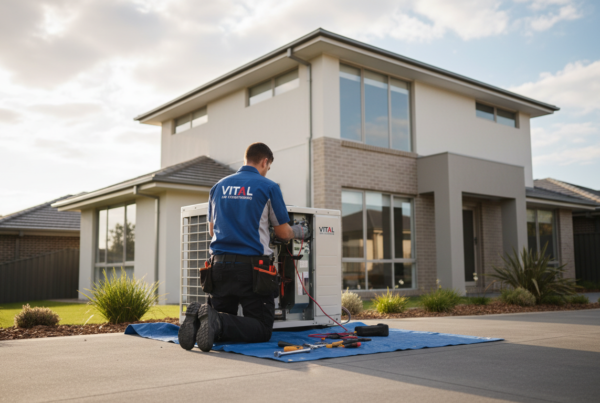
Licensed technicians possess the diagnostic equipment, technical knowledge, and ARC Tick certification required to assess drainage faults, refrigerant issues, and electrical safety concerns. Professional diagnosis includes drain pan inspection, condensate line pressure testing, refrigerant pressure measurement, evaporator coil examination, and verification of safety mechanism function.
For urgent water leakage causing active property damage, 24/7 emergency service ensures rapid response to minimise damage and restore system operation. Review the signs your air conditioner needs immediate servicing to understand escalation criteria for various fault conditions.
Attempting DIY repairs on condensate drainage systems risks damaging drain pans, disconnecting pipes, or voiding manufacturer warranties. Professional repairs include proper materials, compliance with AS/NZS 3500.3 drainage requirements, and verification that safety mechanisms function correctly per AS/NZS 60335.2.40 standards.
Preventative Maintenance to Avoid Drainage Issues
Regular preventative maintenance significantly reduces the risk of condensate drainage faults and extends system lifespan. AIRAH recommends annual professional servicing for residential split systems, with more frequent attention for systems operating in high-use environments or coastal locations where salt air accelerates corrosion.
Professional servicing by ARC Tick licensed technicians includes condensate drain pan cleaning, drain line flushing with appropriate agents to remove algae and biofilm, verification of drain line gradient compliance with AS/NZS 3500.3 minimum 1:100 fall requirements, inspection of drain pan integrity and drain connections, testing of float switch safety mechanisms, and confirmation that the external discharge point remains clear and compliant with local council requirements.
Between professional services, homeowners should perform basic maintenance tasks that prevent drainage issues. Regular filter cleaning or replacement maintains proper airflow across the evaporator coil, preventing ice formation that causes drainage problems. The maintaining your air conditioner filters guide provides detailed instructions for filter access, cleaning frequency, and replacement specifications.
Monthly inspection of the external discharge point during cooling season identifies developing blockages before they cause system shutdown. Check for algae growth at the pipe outlet, insect nests, or debris accumulation that restricts flow. Clear visible obstructions carefully without forcing objects into the pipe, which can push blockages deeper into the system.
The complete air conditioner maintenance checklist provides comprehensive guidance for seasonal preparation, monthly inspections, and professional servicing schedules tailored to Sydney’s climate and typical residential usage patterns.
- ✓
Inspect external drain pipe outlet monthly for blockages, algae buildup, or insect nests during cooling season - ✓
Verify condensate is draining freely during operation — steady drip is normal, pooling or overflow indicates blockage - ✓
Check indoor unit drain pan for standing water, rust, or overflow stains indicating drainage system failure - ✓
Ensure drain pipe has adequate fall (minimum 1:100 gradient per AS/NZS 3500.3) with no sagging or reverse slopes - ✓
Schedule annual professional servicing with ARC Tick licensed technician to flush condensate lines and inspect drain pan float switch - ✓
Monitor for sudden changes in drainage volume or cessation of external dripping during normal cooling operation - ✓
Confirm drain discharge point complies with local council requirements and does not create slip hazards or property damage
Frequently Asked Questions
Is it normal for my air conditioner to drip water outside?
Yes, external water drainage is normal during cooling operation. Split system air conditioners remove humidity from indoor air through the evaporator coil, producing condensate that drains via the condensate pipe to an external discharge point, as specified in AS/NZS 3500.3 (Plumbing and Drainage). A properly functioning 3.5kW split system can produce 1-2 litres of condensate per hour in Sydney’s humid summer conditions. The volume varies based on indoor humidity levels, system capacity, and runtime duration, with higher production during peak summer months when both temperature and humidity reach maximum levels.
How much water should drain from my air conditioner outside?
A typical residential split system produces 0.5-2 litres per hour depending on capacity, humidity levels, and runtime. According to the Australian Institute of Refrigeration, Air Conditioning and Heating (AIRAH), condensate production increases proportionally with indoor humidity levels and cooling load. A system running for eight hours on a humid 35-degree Sydney day can discharge 10-15 litres total, which is normal operation. Excessive or sudden increases in drainage volume may indicate a blocked indoor drain pan causing intermittent overflow, a frozen evaporator coil that is melting, or a refrigerant issue requiring ARC Tick licensed technician assessment.
What does it mean if my air conditioner is leaking water inside instead of outside?
Internal water leakage indicates a blocked condensate drain line, disconnected drain pipe, or frozen evaporator coil causing overflow from the indoor drain pan. This requires immediate attention as per AS/NZS 60335.2.40 (safety of household appliances) to prevent water damage, electrical hazards, and mould growth. Switch off the system at the isolator and contact an ARC Tick licensed technician immediately. The technician must inspect the condensate drainage system for blockages or damage, verify proper drain line gradient per AS/NZS 3500.3 requirements, check refrigerant charge and pressures to rule out frozen coil issues, and test the float switch safety mechanism that should prevent overflow.
Can a blocked drain cause my air conditioner to stop working?
Yes, most modern split systems incorporate a float switch safety mechanism in the drain pan that automatically shuts down the unit when water reaches unsafe levels, as required by AS/NZS 60335.2.40. This prevents internal water damage and electrical faults. The system will not restart until the blockage is cleared and the drain pan is emptied by a qualified technician. The float switch protects your property and the air conditioner’s electrical components, but it indicates an underlying drainage fault that requires professional attention. Attempting to bypass or disable this safety mechanism violates Australian safety standards and creates serious electrical and water damage risks.
How often should I check my air conditioner’s external drain pipe?
AIRAH recommends inspecting the external condensate discharge point monthly during cooling season and before summer. Check for algae growth, insect nests, or debris blocking the drain outlet. Professional servicing every 12 months, as specified in manufacturer warranties and AS/NZS 3500.3 compliance requirements, includes condensate system inspection and cleaning by an ARC Tick licensed technician. Annual servicing includes drain pan cleaning, condensate line flushing to remove algae and biofilm, verification of proper gradient and discharge point compliance, and testing of safety mechanisms. Systems in high-use environments or coastal locations may require more frequent professional attention due to accelerated algae growth and salt air corrosion.
Vital Air Conditioning has serviced Sydney air conditioning systems for over 25 years. Our ARC Tick licensed technicians diagnose condensate drainage faults, clear blocked drain lines, and ensure AS/NZS 3500.3 compliance. Contact us for same-day service backed by our 5-year workmanship warranty.